📱 PWA (Progressive Web Apps) have become one of the most popular distribution models in iGaming and related verticals over the past few years. Traditional approaches such as landing pages and mobile apps are no longer as effective, as they increasingly run into platform restrictions and strict moderation.
PWAs stand out because of their hybrid nature. On one hand, they are web pages that can be launched and scaled quickly. On the other hand, users perceive them as regular apps with familiar installation flows, home screen icons and app-like interfaces.
For media buyers, PWAs offer a format that launches faster, works longer and in most cases converts better thanks to a familiar user experience.
PWA vs Traditional Apps
If you compare PWAs to classic mobile app campaigns, the differences become obvious right away.
The main advantage of PWA is 🙅 independence from the App Store and Google Play. There is no need to pass moderation, obtain developer status, publish an app or risk losing all traffic because of a ban. At the same time, core app mechanics remain available: installation on the device, a home screen icon and push notifications that help bring users back and improve ROI.
🚀 Launch speed is another major benefit. While traditional apps require development and testing, PWAs can be assembled almost instantly like a builder. They also remain highly flexible. Domains, landing pages, creatives and the entire funnel can be changed quickly without rebuilding the product.
However, fast launch speed does not mean there is no technical side to understand. For example, postback setup, how click_id is passed to an affiliate program and how registration or deposit data is sent back. Mistakes at this stage often lead to a situation where traffic is coming in, deposits are right here, but analytics show nothing.
The second important part is the funnel itself. A PWA is not a magic solution. You still need to understand how to pass moderation, which creatives perform well, and which landing pages guide users toward installation more effectively. In other words, traffic management is still essential.
In practice, most launch issues come from common mistakes. Overly aggressive creatives that get banned quickly should be avoided and push notifications should never be ignored, since they often generate a significant share of additional profit.
Domains also deserve special attention. Cheap low-quality options often lead to faster bans and lower conversion rates. Better-quality domains tend to perform better and build more trust with both ad platforms and users.
DAPPS: A PWA Service for iGaming Mobile Traffic
If you do not want to handle everything yourself, specialized services can help you create and launch a PWA quickly. One of them is 🔥 DAPPS, which entered the market more than six years ago. Since then, it has been used by over 400 clients and has generated more than 40 million installs.
DAPPS combines a builder, analytics and traffic management tools in one interface, while also providing the infrastructure needed for launch and scaling. To register, users need to contact support via Telegram, where they will be assisted with account creation.
At the core of the platform is a builder that allows you to create a ready-to-launch product in just a few steps.
Deeplinks
The Deeplinks section is where user scenarios are created. It defines who sees what and in what format after clicking a link.
The first step is segmentation: geography and operating system. This allows users from different countries or devices to receive different content or offers.
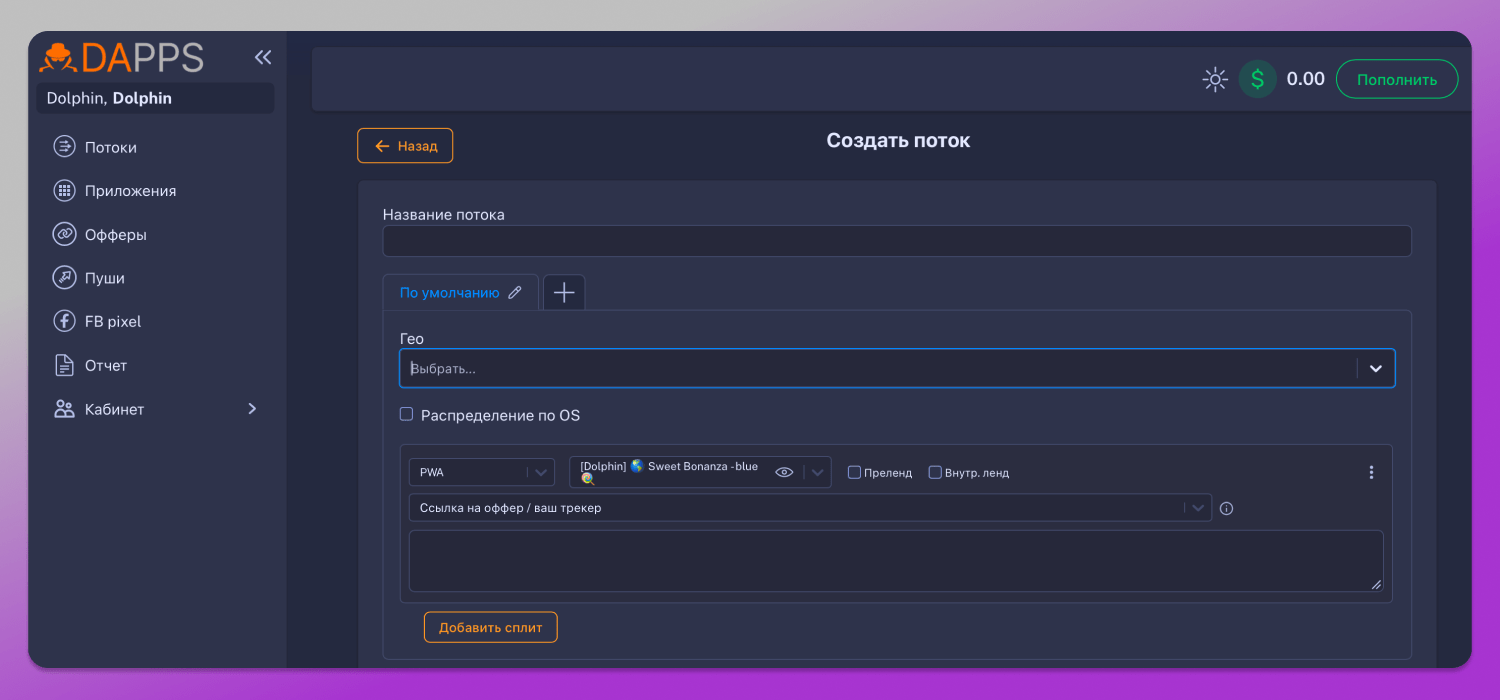
Here you can define exactly what the user will see:
- A PWA shown to the user;
- A pre-landing page before the main action;
- An internal landing page;
- A redirect to an external offer or tracker.
There is also split-testing functionality, where the same traffic is divided between several directions in order to compare results and choose the best-performing option.
The second part of this section includes traffic filtering tools. Cloaking settings determine which traffic is considered target traffic and which is not. Together with this, a white page can be used to redirect unwanted users.
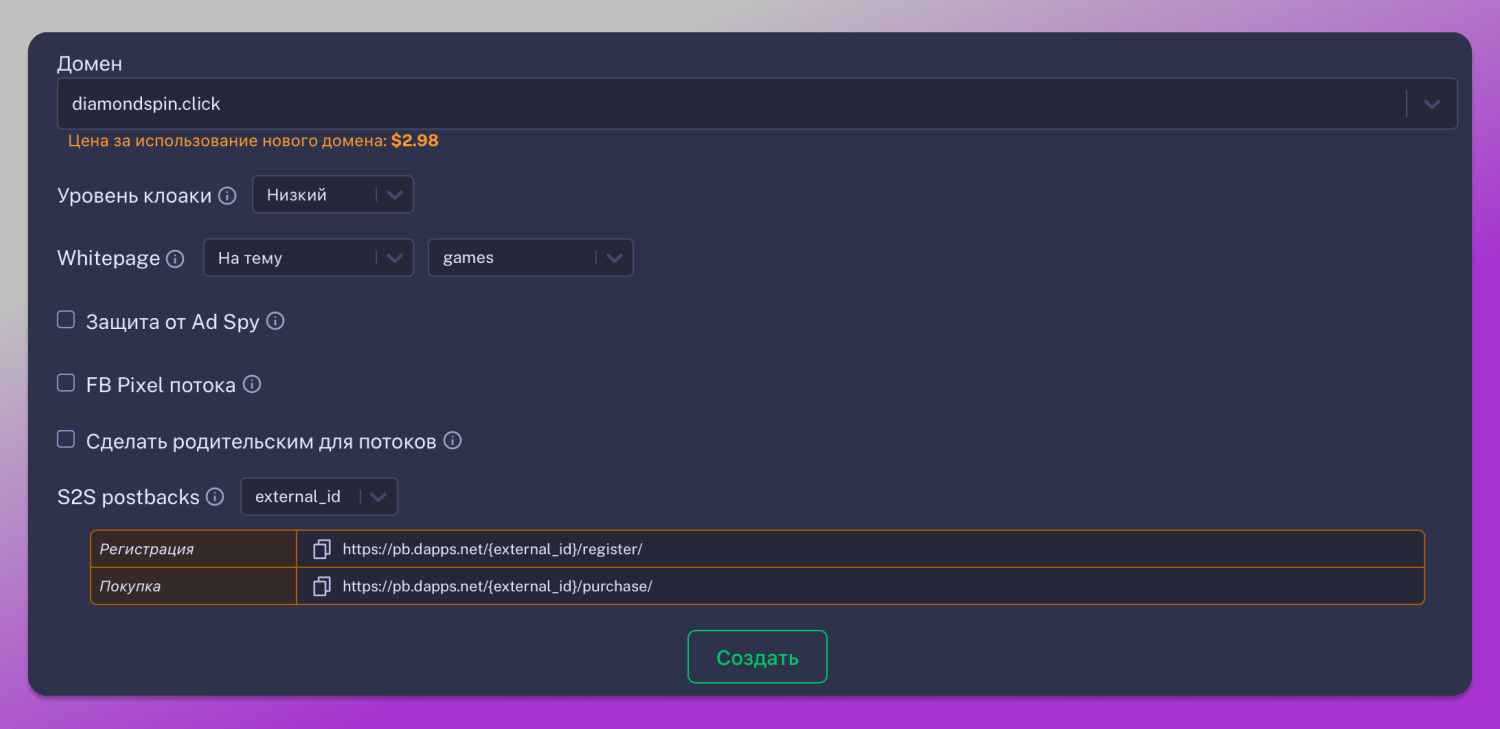
S2S postbacks are also configured here. They are a mechanism for sending conversion data back to a tracker or affiliate program. This is necessary for receiving accurate analytics and campaign optimization.
Apps
The Apps section contains PWA settings and controls how the product looks during installation and the first user interaction.
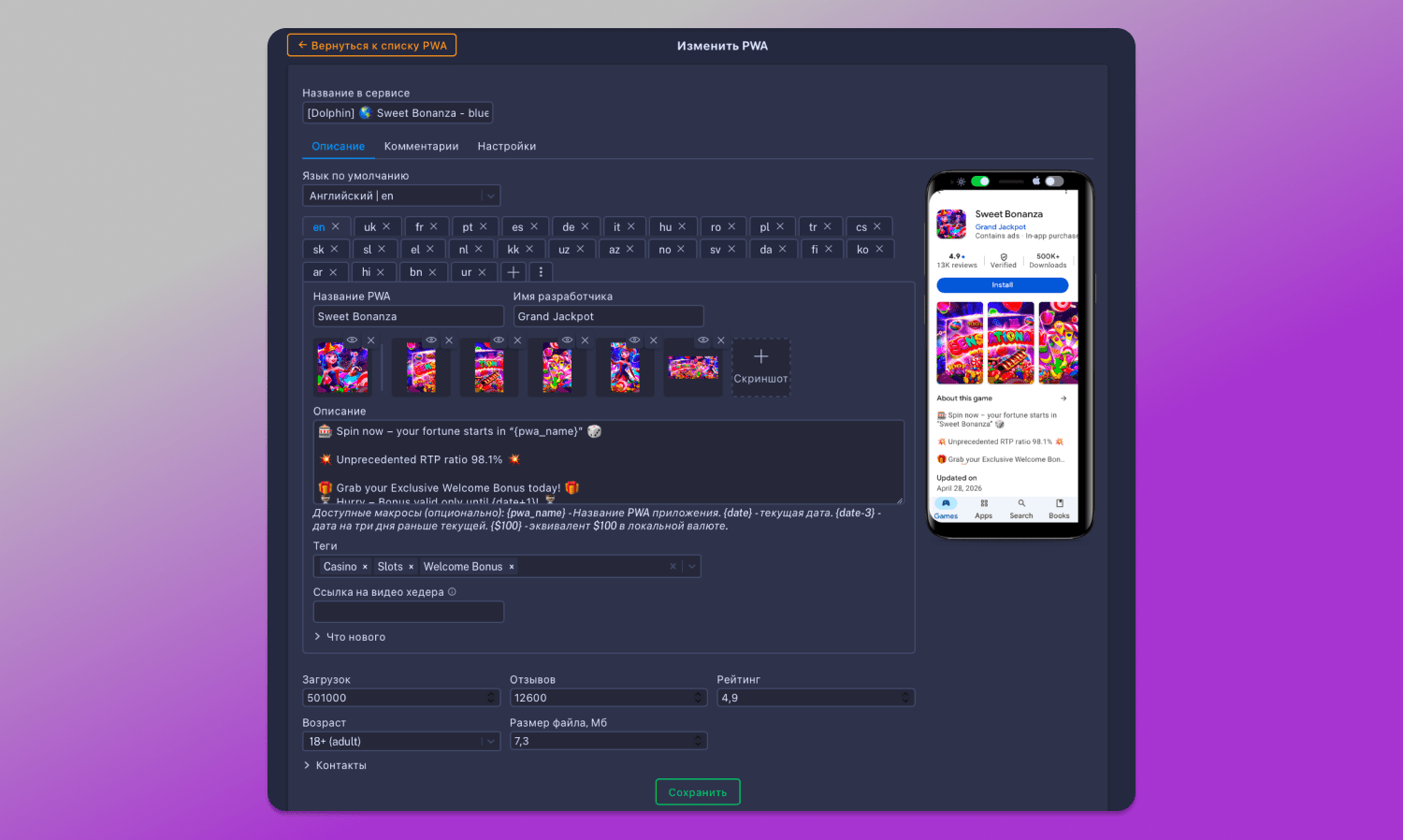
Main attributes include:
- Name;
- Description;
- Developer name;
- Icon and visual elements;
- Categories and tags;
- Age restrictions.
Additional elements such as ratings, download counts and reviews can also be added.
This helps create a familiar interface that resembles an app store page. Because of this, the PWA feels less like a website and more like a real mobile app with a clear structure. In other words, it creates a storefront that shapes the first impression and can significantly impact install conversion rates.
DAPPS also provides ready-made PWA templates tested on real traffic, which simplifies launch and reduces mistakes at the start.
Offers
The Offers section is where target links are added.
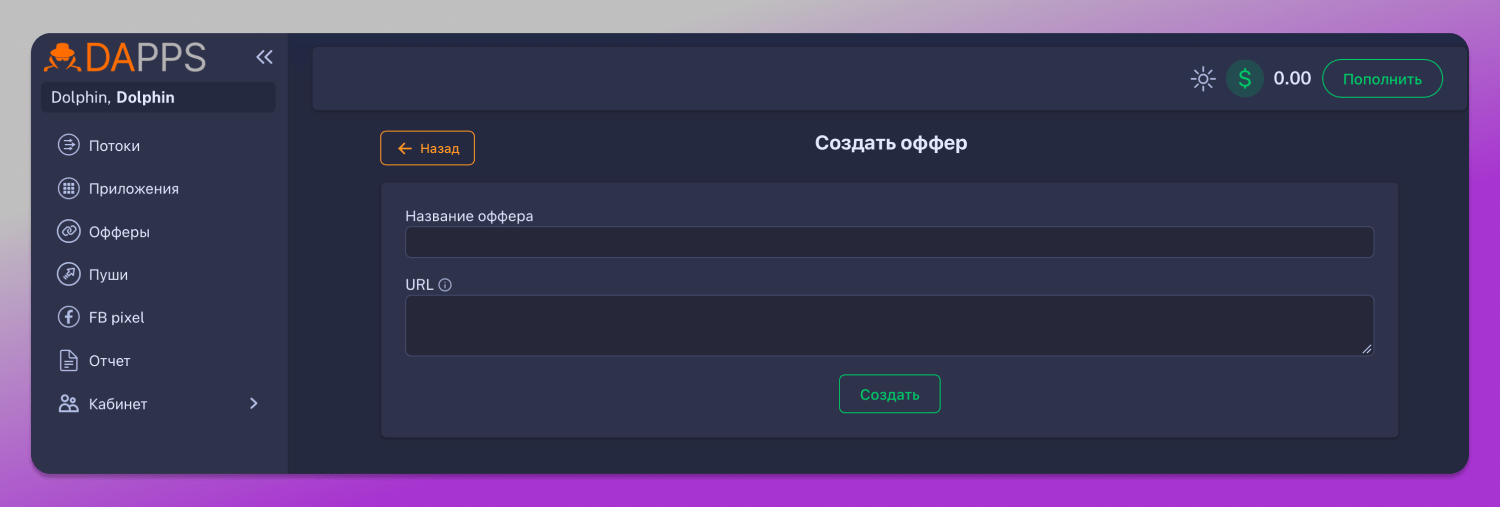
There are only two parameters here:
- Offer name;
- URL — the tarhet link.
Despite its simplicity, this block plays a critical role because the offer is the final point of the entire funnel. This is where the user ends up after passing through the flow, pre-landing page and other stages.
One and the same offer can be reused across multiple scenarios, changed centrally and managed more efficiently.
Push Notifications
This section is responsible for 🔄 re-engaging users who have already visited the PWA and granted permission to receive notifications.
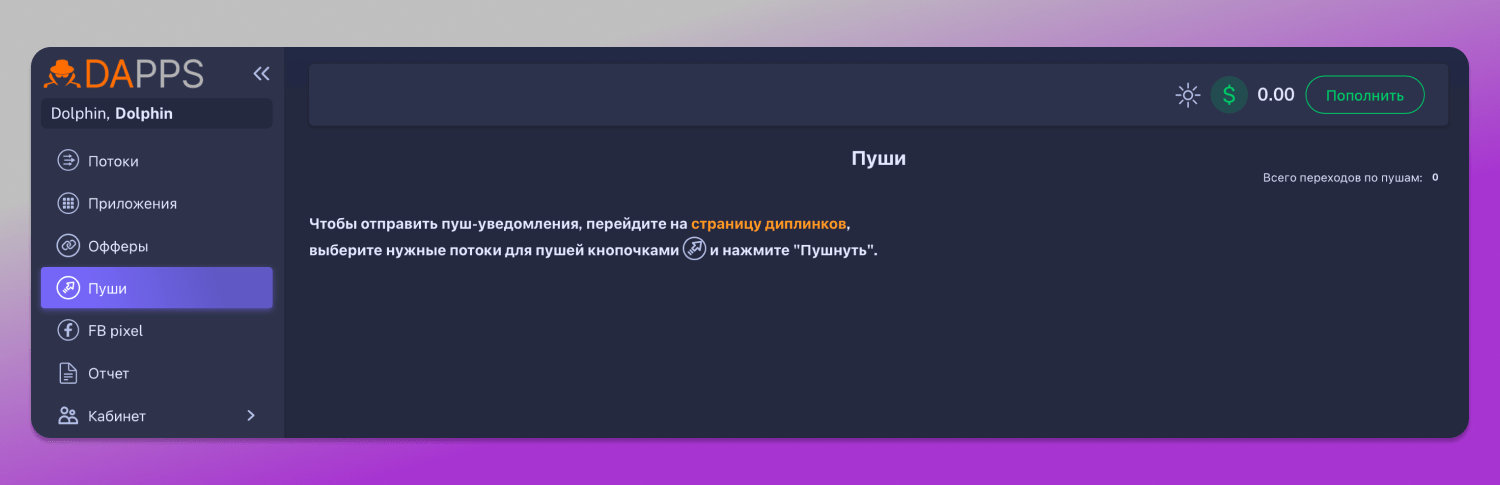
Instead of sending pushes to everyone, you choose specific deeplinks, meaning a pre-selected audience that will receive the notification.
For example, notifications can be sent to users who:
- Installed the app but did not register;
- Registered but did not make a deposit;
- Made a deposit but did not return.
As a result, this section is used to work with already acquired users and improve the overall efficiency of the funnel through repeat engagement.
FB Pixel
The FB Pixel section is designed for integration with Facebook Pixel, Meta’s analytics tool.
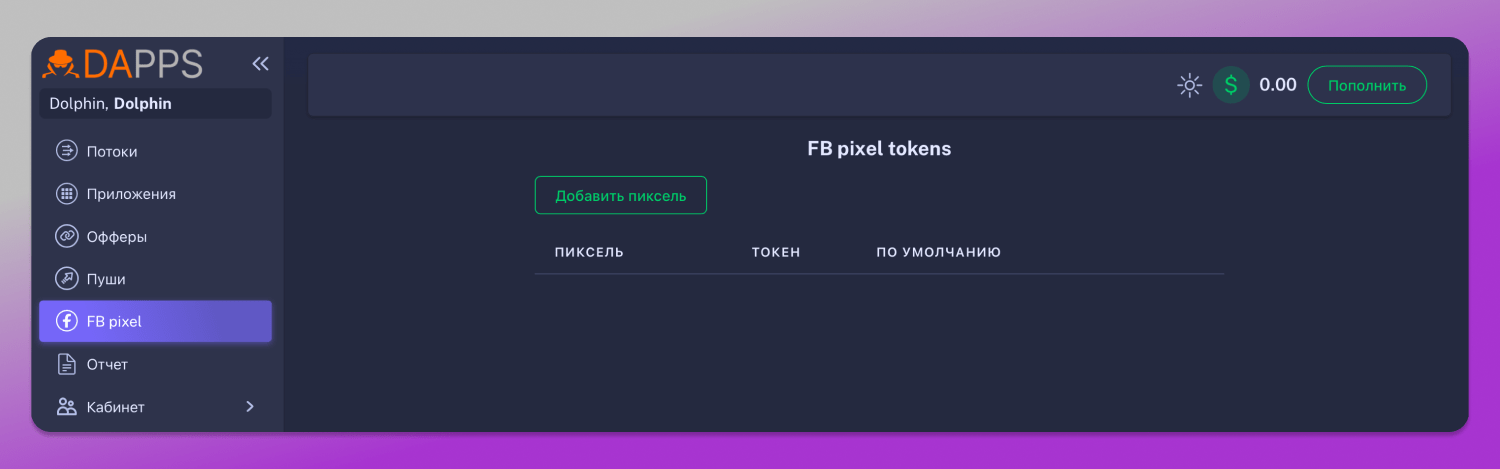
Its purpose is to track user actions inside the funnel and send this data back to the ad system. This includes events such as visits, PWA installs, clicks or conversions.
Account
The Account section combines everything related to account management, data, and integrations.
It is divided into several tabs.
Company Statistics and App Statistics show aggregated data: overall app performance, which apps generate more activity and how traffic is distributed.
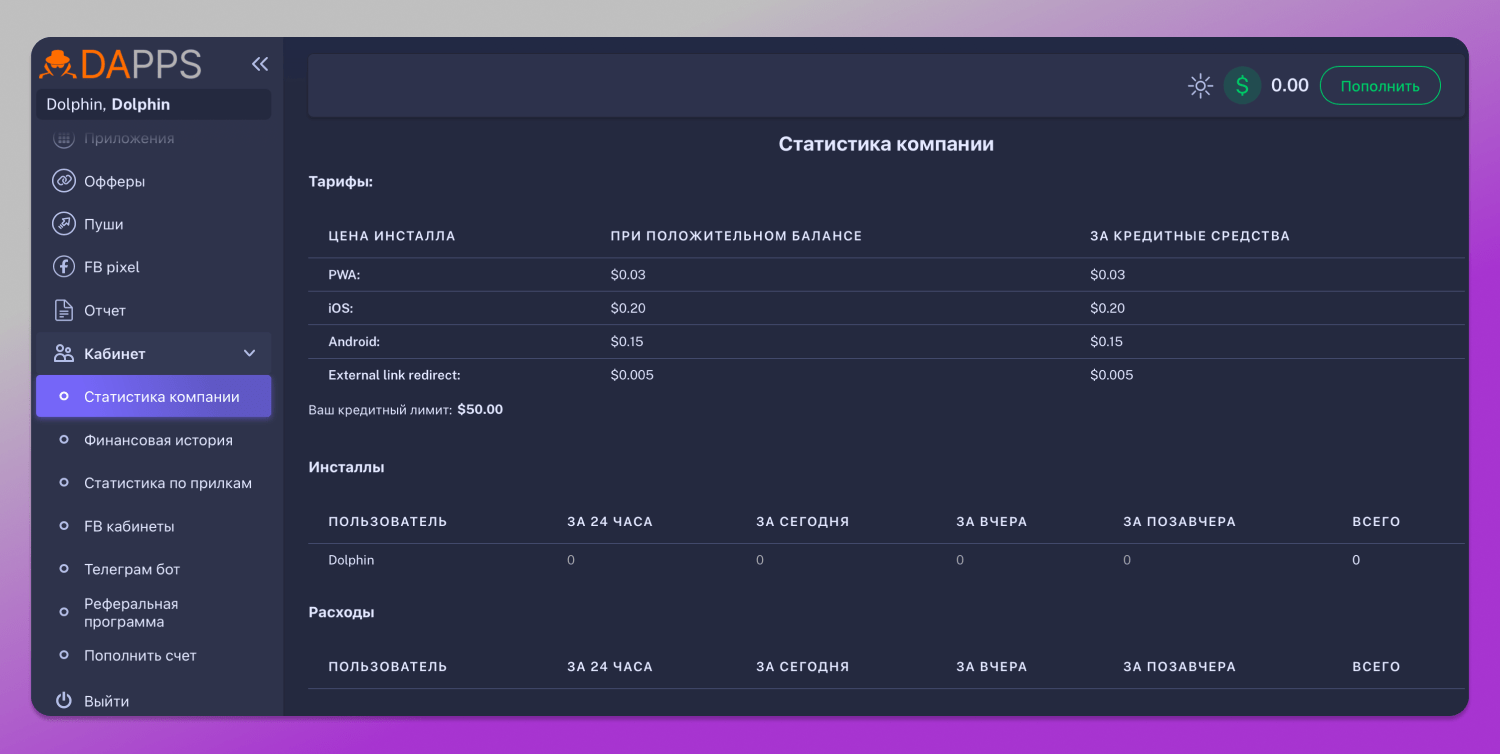
Financial History is a log of all operations inside the platform. It is used to track expenses, top-ups and overall accounting.
FB Accounts is the place for connecting Meta ad accounts. This is used to link traffic, apps and analytics, especially when Pixel is being used.
There is also a separate Telegram integration through a bot that serves as a supporting tool. It can be used to manage certain functions outside the platform. For example, adding Facebook ad accounts, receiving app information or performing quick actions. Connection is done through an authorization token that links the account with the bot and grants access to the required features.
Conclusion
PWA is a convenient and flexible tool for working with mobile traffic, especially in the iGaming. It allows users to launch funnels faster, test hypotheses, scale the most effective approaches and bring users back more efficiently.