Reacheffect: Top Advertising Strategies for 2026
Blog » Reacheffect: Top Advertising Strategies for 2026
Advertising costs aren’t getting any cheaper.
If you’re still throwing money at the same old campaigns without adjusting your approach, you’re probably watching your margins shrink while your competitors figure out what actually works.
The good news is you don’t need a bigger budget. You need 📈 smarter formats and better execution. That’s exactly where performance-focused platforms like Reacheffect come into play, giving advertisers access to scalable formats that still deliver results in 2026.
Here’s what’s actually moving the needle in 2026.
1. Push Notifications: Your Secret Weapon for Bringing People Back
Remember that customer who almost bought from you last week? Push notifications are how you get them back without being annoying about it.
Why they work 🛠
These messages hit phones and desktops directly, which means they’re not competing with a hundred other ads in a feed. They’re personal, immediate, and surprisingly effective at re-engagement.
The execution ⚙️
The trick is timing and relevance. Nobody wants a push notification about winter coats in July. But a gentle reminder about an abandoned cart or a time-sensitive offer? That actually gets clicks.
Pro tip: Segment your audience ruthlessly. Someone who’s been inactive for six months needs a different message than someone who bought from you yesterday. Treat them accordingly, and your engagement rates will thank you.
2. Pop & Pop-Under Ads: Yes, They Still Work (When Done Right)
I know what you’re thinking. “Aren’t those the annoying ads everyone hates?”
Well, yes, if you do them badly.
The reality
Here’s the thing: pops and pop-unders ☝️ still deliver massive reach at a fraction of the cost of premium placements, especially when you’re working with a pop up ad network like Reacheffect that focuses on targeting, frequency control, and offer relevance.
The key is matching the right offer to the right audience and avoiding the “ambush” effect that gave this format a bad reputation in the past.
Pop-unders have evolved
Pop-unders now load behind the active browser window, allowing users to 🌱 discover them organically instead of being interrupted mid-action. That subtle difference dramatically improves engagement when the offer is aligned with user intent.
For brand awareness campaigns or wide-net prospecting, the sheer volume and cost efficiency are still hard to beat.
What’s changed 🤔
Modern pop formats come with frequency capping, advanced targeting, and smarter triggers. You’re not hitting the same person with the same ad fifteen times a day anymore. The technology has caught up with the format’s potential.
3. Native Ads: Blend In to Stand Out
If your ad looks like an ad, you’ve already lost half the battle.
Native ads solve this by fitting naturally into the content people are already consuming.
What makes them different ⬇️
These are the “recommended for you” articles, the in-feed placements that don’t scream “advertisement,” and the content that actually provides value before asking for anything in return.
When someone’s already in reading mode, a well-crafted native ad doesn’t feel like an interruption, it feels like a continuation of what they’re interested in.
Where the ROI comes from 💲
The ROI here comes from trust and context. You’re not fighting for attention; you’re earning it by being relevant.
Platform considerations
Different platforms have different native ad ecosystems. What works on a news site won’t necessarily work on a social platform. The successful advertisers are creating multiple versions of their native content, each tailored to where it’ll appear.
Metrics to watch
Time spent, scroll depth, and secondary actions matter more than click-through rates here. You want people engaging with the content, not just clicking through and bouncing immediately.
4. Banner Ads: Still Relevant for Brand Reinforcement
Look, nobody’s clicking banner ads at the rate they did in 2005.
But that’s not really the point anymore.
The evolution 📈
Banner ads have evolved into a brand reinforcement tool. They keep you visible, they build recognition, and when paired with retargeting, they’re excellent at nudging people down the funnel over time.
Think of them differently 🤓
Think of them as digital billboards, you don’t expect someone to pull over and buy immediately, but after seeing your message enough times, you’re the first brand they think of when they’re ready to purchase.
The retargeting multiplier
Here’s where banners really shine in 2026: paired with smart retargeting, they become incredibly efficient. Someone visits your site, doesn’t convert, and then sees your banner three times over the next week with progressively better offers? That’s not spam, that’s strategic persistence.
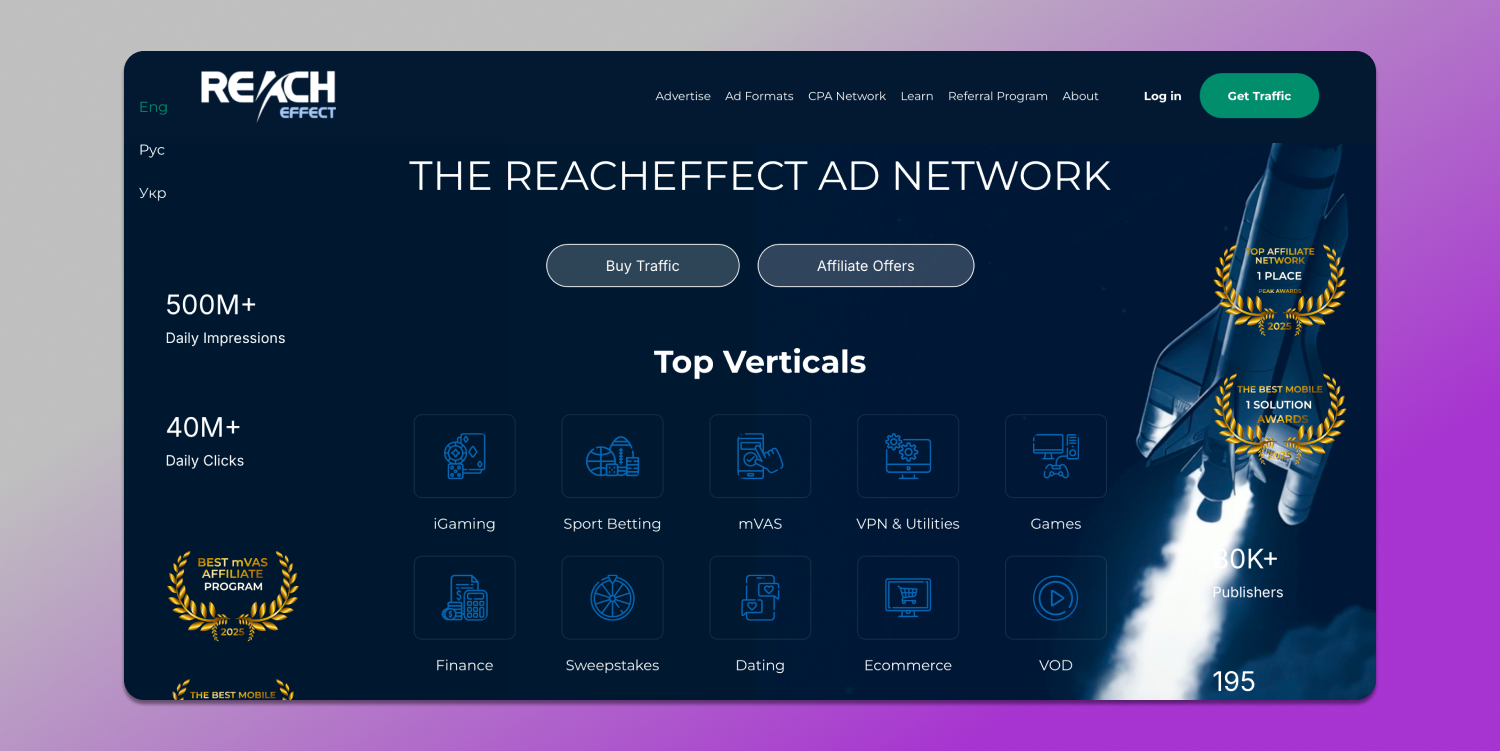
Making It All Work: The Reacheffect Advantage
Here’s where most advertisers struggle: managing all these different formats, tracking what’s working, and optimizing on the fly without losing your mind.
The multi-format problem
Running push notifications through one platform, native ads through another, and CPA campaigns through a third? You’re spending more time wrestling with dashboards than actually improving your campaigns.
That’s the gap Reacheffect fills.
Their platform brings everything together: analytics that actually tell you something useful, optimization tools that do the heavy lifting, and support for all these ad formats in one place with a human support team here for you 24/7.
The Bottom Line: Adapt or Get Left Behind
The best advertising strategy isn’t about picking one perfect format.
It’s about using the right mix for your specific goals and having the tools to execute and optimize effectively.
2026 is going to reward the advertisers who adapt quickly and optimize constantly. The question is whether you’ll be one of them.
The formats are available. The tools exist. The only thing left is execution.
So what are you waiting for?