
Updated: 01.06.2026.
Disclaimer: You’re reading a comparison review of antidetect browsers on the Dolphin Anty blog. This material is based on feedback and reviews from real users who have worked with us before or are still working with us. We’ve done our best to present the information as objectively as possible, relying solely on facts, so you can make an informed decision.
Antidetect browsers 🚀 Dolphin Anty and Incogniton are designed to solve the same problem: they are helping users manage multiple accounts safely. However, their approaches to workflow organization, automation and profile management differ significantly. In this review, we’ll ⚖️ compare them across key areas, including interface design, functionality, fingerprint spoofing capabilities, automation tools, pricing and more, to see which browser offers more value in real-world use.
📣 If you are already considering switching from Incogniton to Dolphin Anty, now is the perfect time: use the promo code INCOGNITON21 to get a 21% discount. You can activate it via the link.
Incognition: Summary
Incognition позиционирует себя как решение для мультиаккаунтинга и работы с трафиком. Позволяет работать с несколькими профилями, настраивать их отпечатки и автоматизировать часть действий.
💻 Available on: Windows, macOS (Intel and Silicone).
🇬🇧 Languages: Russian, English, Portuguese, Chinese, French.
🔗 Official website: https://incogniton.com/
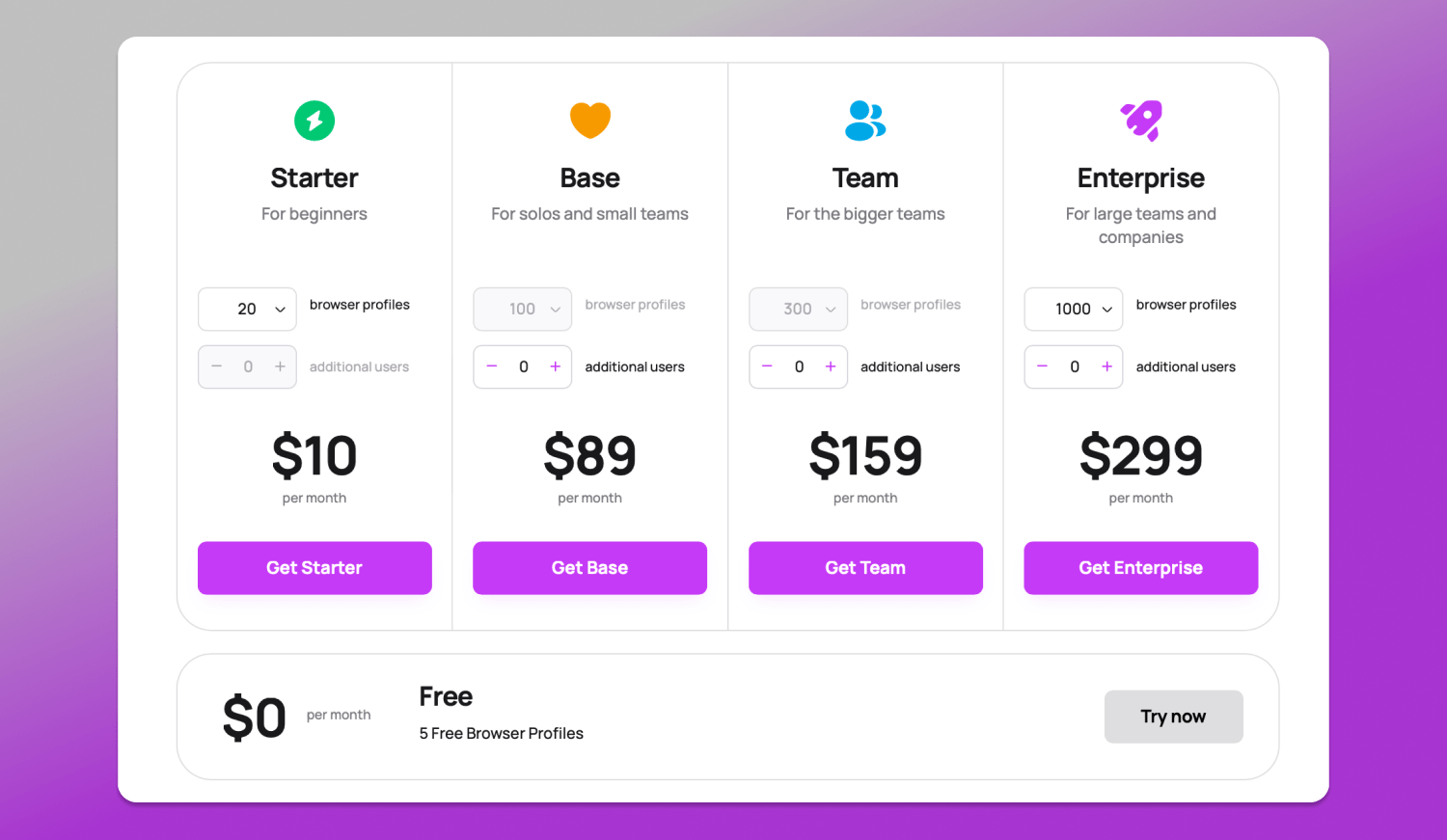
💰 Pricing: from $19,99 permonth
🏁 Trial: 10 profiles for 2 month, then their number is reduced to 3.
Dolphin Anty: Summary
Dolphin Anty is a rapidly evolving antidetect browser backed by a large team. It regularly releases updates to the browser core and fingerprints, and introduces new features. As a result, Dolphin Anty offers not only 🥷 a high level of anonymity, but also a well-designed 🛠 suite of tools for profile management, automation and teamwork.
💻 Available on: Windows, macOS (Intel and Silicone), Linux;
🇬🇧 Languages: Russian, Ukrainian, English, Spanish, Portuguese and Vietnamese;
🔗 Official website: dolphin-anty.com;
💰 Pricing: от 0$;
🏁 Trial: up to 5 profiles for free without linking a card..
Many websites and affiliate platforms regularly recognise Dolphin Anty 🏆 as the best antidetect browser. But let’s compare it with Incognition in practice.
Workspace
Any antidetect browser provides a profile management interface where the core work takes place. Let’s start the comparison with this aspect.
Interface
When the interface is simple and intuitive, users get used to it very quickly. This means you can get to grips with everything without having to read manuals or documentation.
Overall, the interfaces of Incognition and Dolphin Anty are similar: profiles are listed and their settings are displayed in columns. Columns can be added or removed depending on the user’s needs.
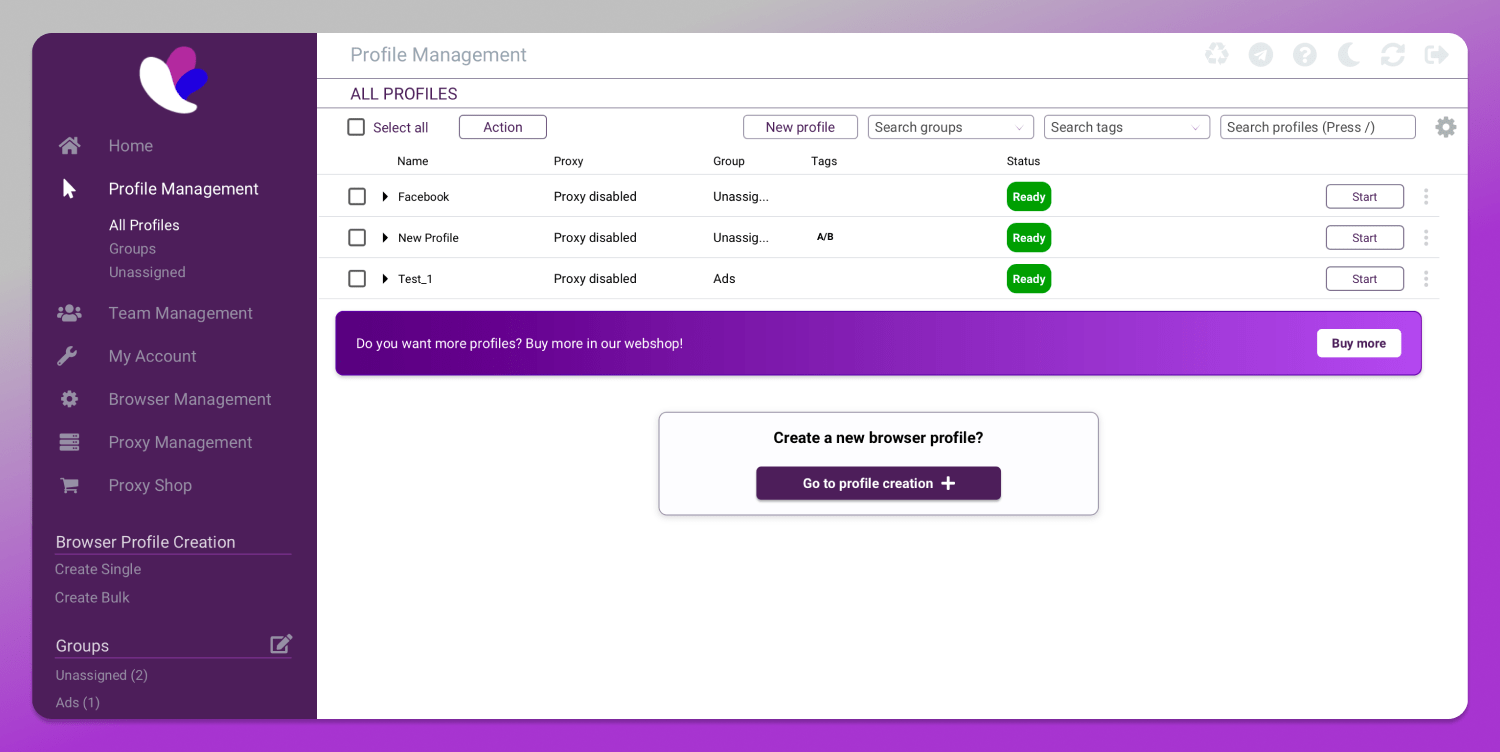
Incognition interface.
At the same time, Incognition’s interface feels 🧱 somewhat cluttered. The navigation panel on the left is always visible and can’t be collapsed, which may become an issue for users working on smaller screens.
The banner promoting additional profile purchases can’t be dismissed either. If you’re on the free plan, it remains permanently visible in the interface.
Dolphin Anty’s interface ✅ feels cleaner and more intuitive. There are no permanently visible elements taking up valuable screen space.
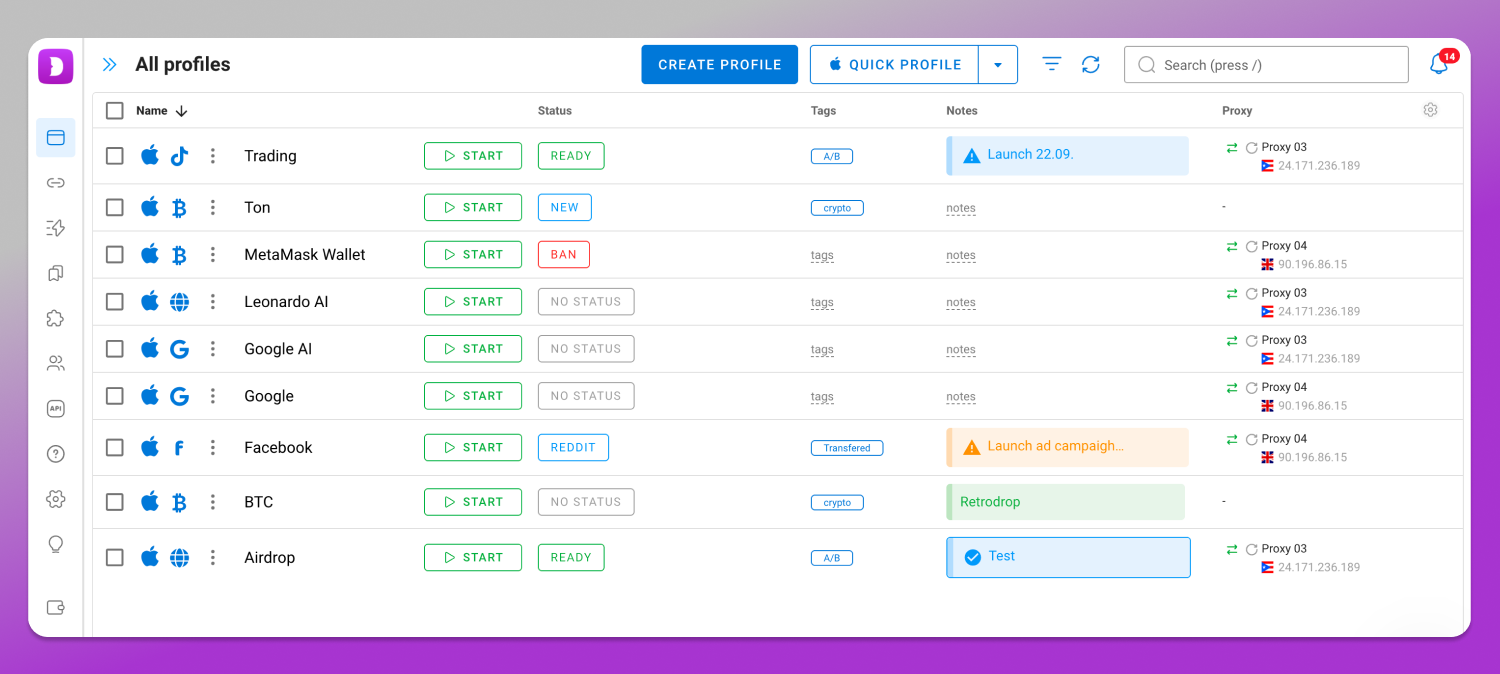
There are no localization issues either. Each language version is fully translated, with natural wording throughout the interface.
Navigation
In multiaccounting it’s common to manage dozens or even hundreds of profiles. At that scale, efficient organization and quick access become essential.
In Incognition, profiles can be organized using groups and sorted by the parameters available in each column.
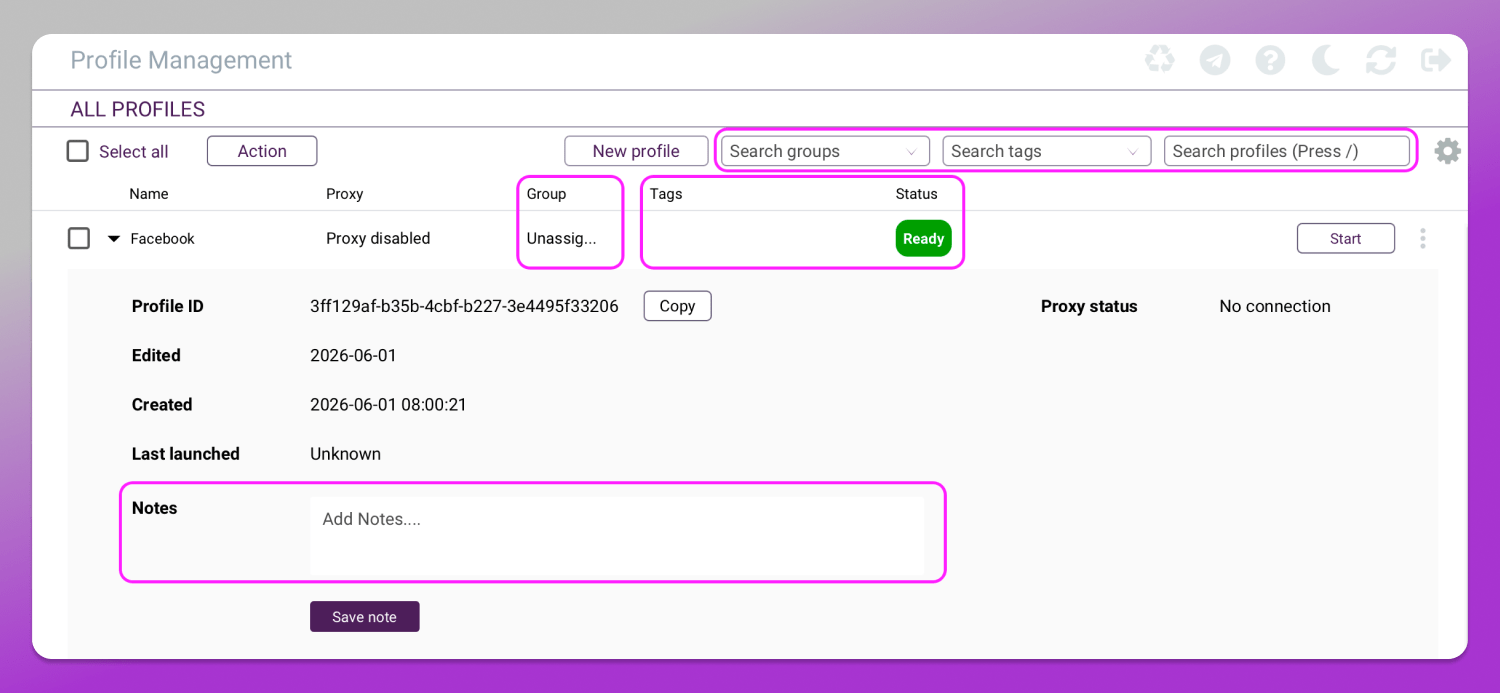
On top of that, Incognition supports tags and statuses, but there are a few usability quirks. For example, if you use the “/” character in a tag, the cursor automatically jumps to the search bar even though the tag editing window is still open. Statuses also can’t be customized. They are tied exclusively to the profile’s current state, such as Ready to Launch, Running or Syncing.
To view notes in Incognition, you need to expand the profile first. This adds an extra click and slows down navigation. There’s also no option to display notes as a separate column.
Search functionality is limited to profile names, tags and groups.
⛵ Navigation in Dolphin Anty is far more flexible. Not only does it offer all of the same organizational tools, but using them feels much more streamlined in day-to-day work.
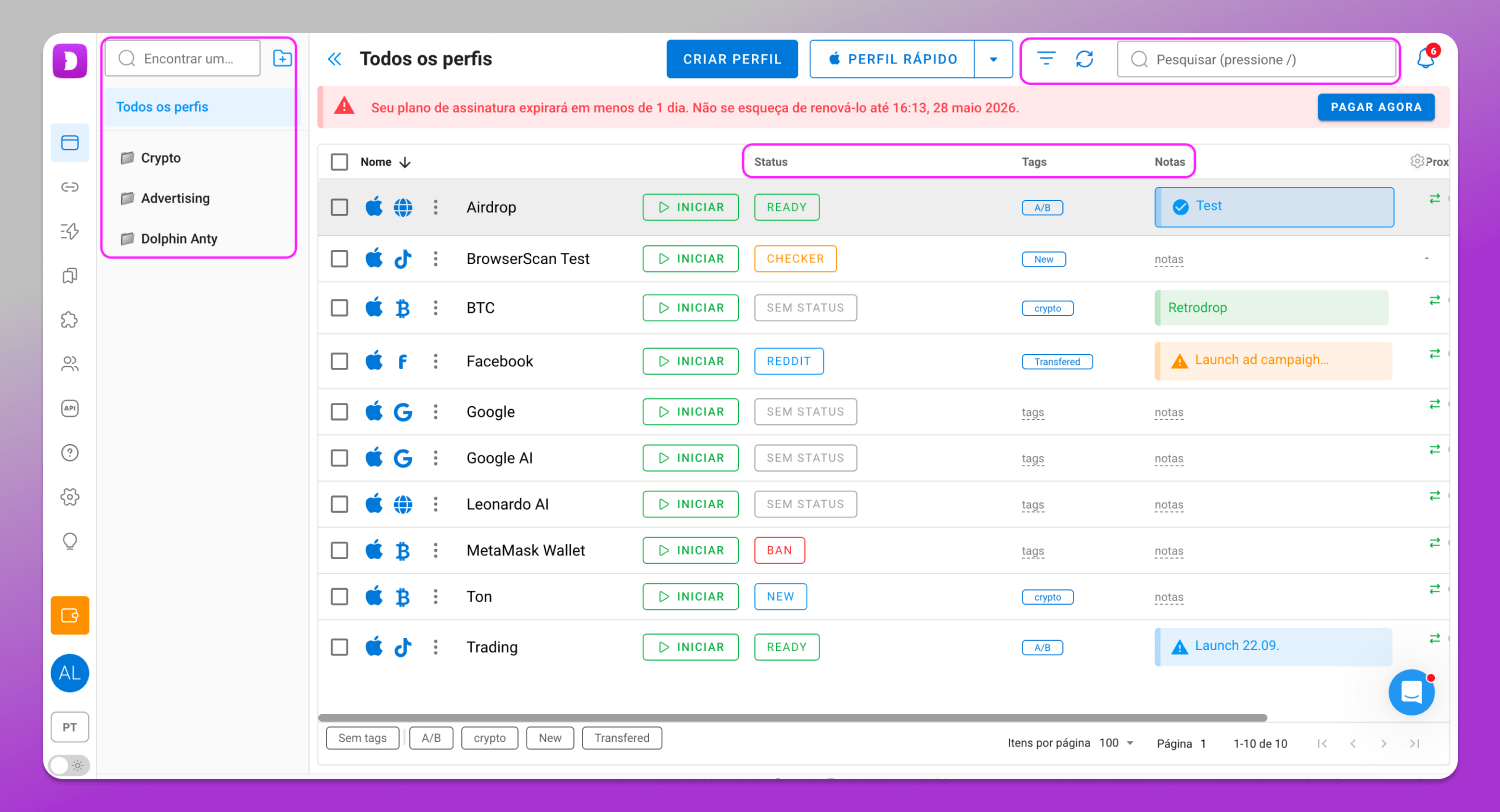
Tags can be added with a single click. Once created, they appear in the lower-left corner of the interface. To display all profiles with a specific tag, simply click it.
Statuses are fully customizable and can be tailored to your workflow. The actual profile state is shown separately via the button to the right of its name, such as “Launch” or “Stop.”
Notes are integrated directly into the interface and remain visible at all times unless you intentionally hide the column. They support editing, formatting, color-coding and special symbols, making it much easier to spot important information at a glance without reading through entire notes.
Search is also significantly more powerful. Profiles can be filtered by name, assigned user, tag, status, primary websites, proxy, notes and folders.
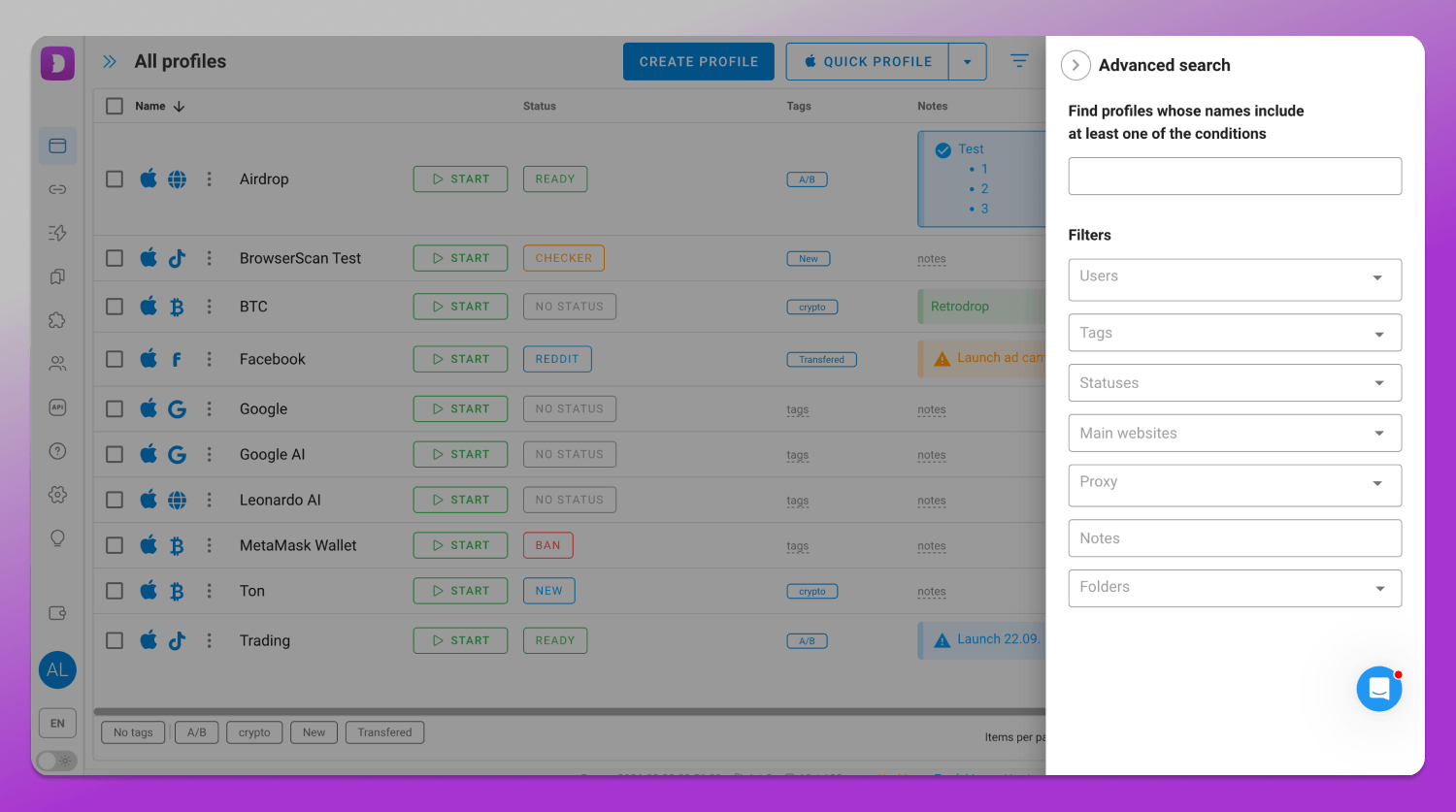
Despite offering a similar feature set on paper, the two browsers take very different approaches to interface design. This is where Dolphin Anty stands out. Instead of adding features simply to tick a box, it focuses on making them practical, intuitive and efficient to use in real-world workflows.
Browser Fingerprint Management
A realistic browser fingerprint is a fundamental requirement for successful multiaccounting. It allows profiles to blend in naturally with regular internet traffic and reduces the risk of attracting attention from antifraud systems.
In Incognition fingerprint settings are configured during profile creation. The browser provides a wide range of customization options, but the interface splits individual fingerprint parameters across multiple sections. The reasoning behind this layout is not entirely clear as it requires considerably more navigation between tabs and menus. Aside from that, the fingerprinting toolkit covers all the essentials:
- Timezone;
- WebRTC;
- Geolocation;
- User-Agent;
- Screen resolution;
- Platform;
- CPU cores;
- Language;
- Extensions;
- Fonts;
- Media devices;
- AudioContext;
- DNS…
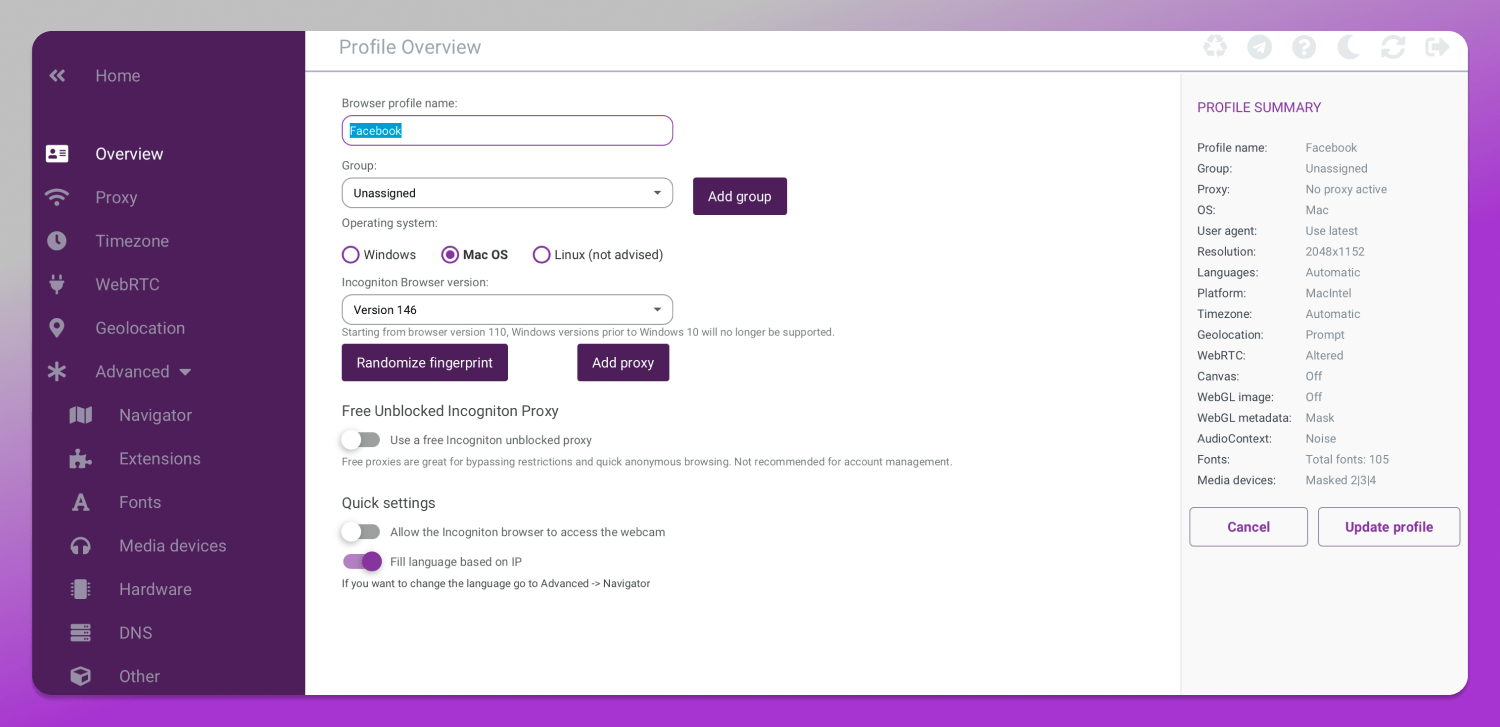
… and other key fingerprint parameters.
In Dolphin Anty, fingerprint settings are organized into just two sections: General and Advanced. The General tab is designed for quick profile creation, while Advanced gives experienced users access to more control with fingerprint parameters grouped logically for easier navigation.
Dolphin Anty also includes several unique fingerprint settings that are rarely found in other antidetect browsers including Incognition. Among them are MAC address and device name, allowing for an even more realistic and consistent browser environment.
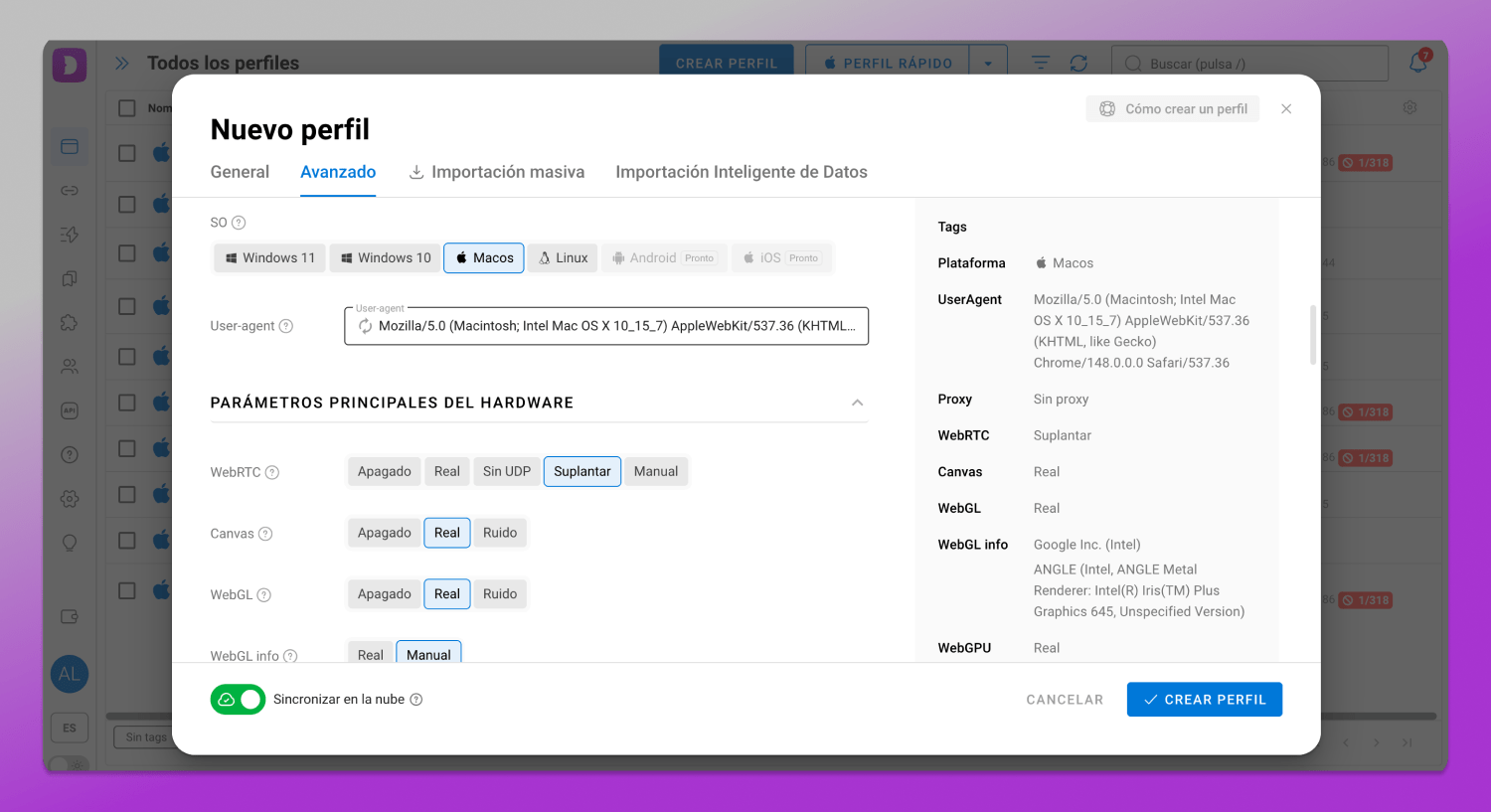
Dolphin Anty also includes a Quick Profile feature, allowing users to create a fully configured browser profile with a single click.
Features in Dolphin Anty and Incognition
Modern antidetect browsers offer far more than fingerprint spoofing and profile management. Let’s take a closer look at how Dolphin Anty and Incognition compare in these areas.
Automation
Automation becomes essential once repetitive tasks start consuming a significant portion of your work time. In this aspect Incognition objectively falls behind Dolphin Anty, both in terms of available functionality and how those features are implemented.
Both browsers include a profile synchronizer, but in Incognition it’s surprisingly difficult to find. The feature is tucked away inside the context menu under the profile launch options, making it far less discoverable than it should be.
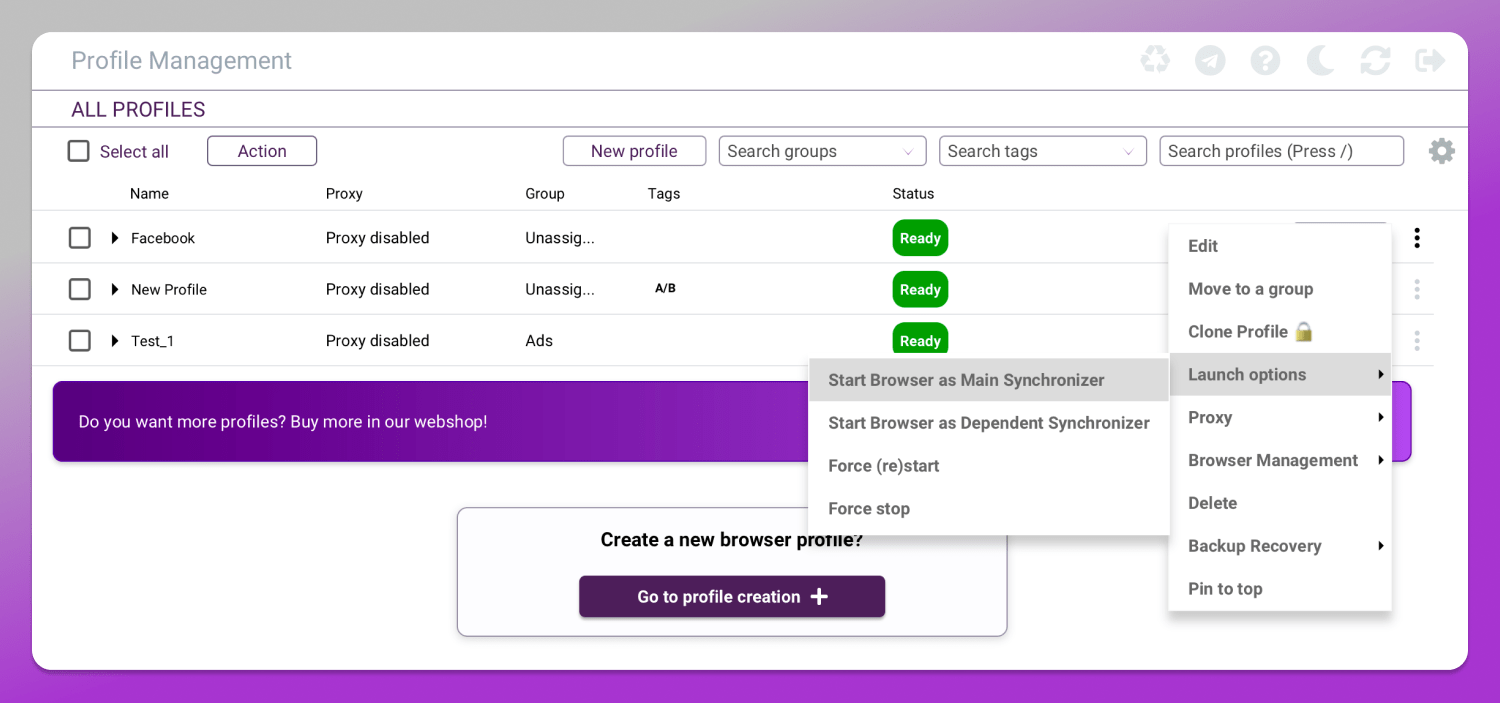
There are two available options:
- Launch the browser as the primary synchronizer;
- Launch it as a dependent profile synchronizer.
In the first case, nothing happens. In the second, a pop-up appears stating that the synchronizer cannot be launched.
The same issue occurs if you select one or more profiles and navigate to Action — Launch options — Start as Dependent Synchronizer. Instead of starting the synchronizer, the browser displays an error message indicating that the feature is unavailable.
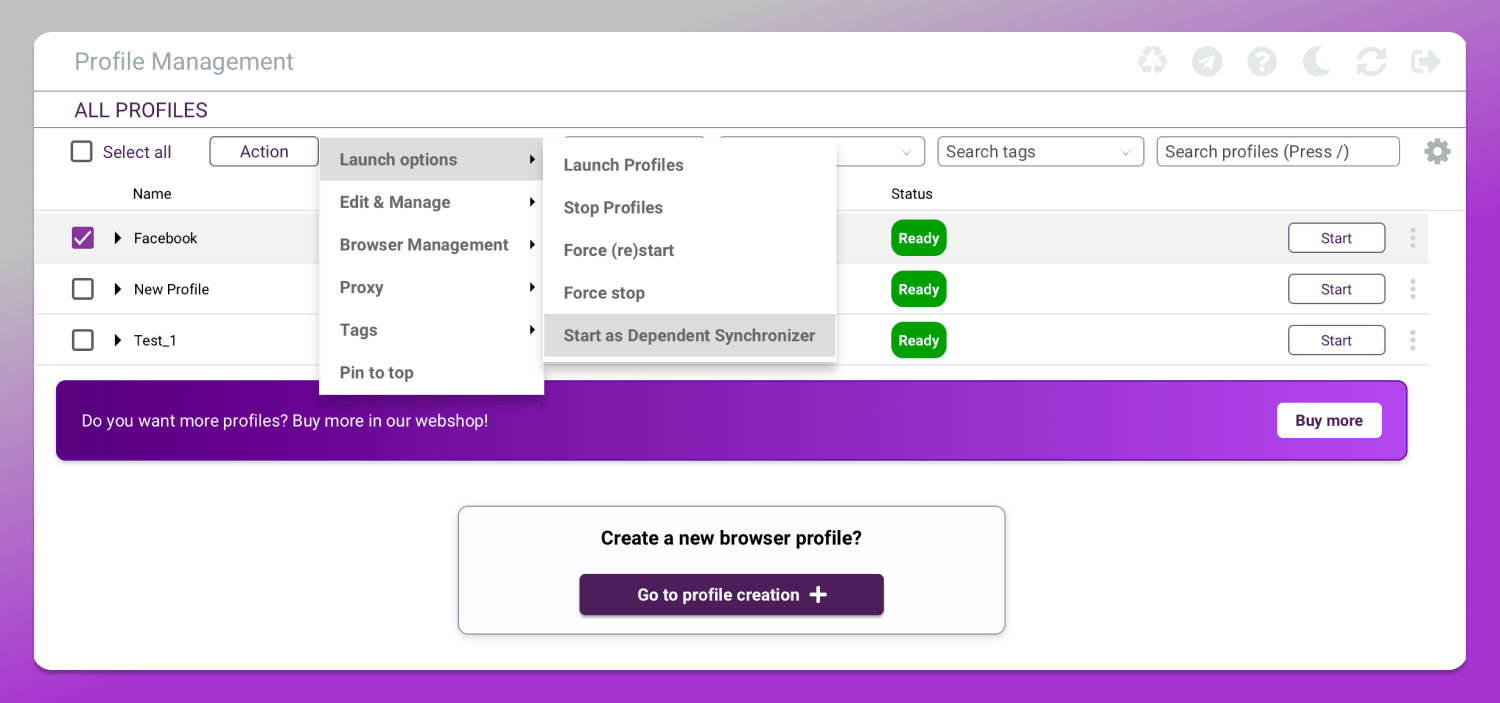
The official Incognition documentation didn’t help either, as parts of it appear to be outdated and some screenshots no longer match the current interface. ❌ As a result, we were unable to get the synchronizer working in Incognition.
The browser also includes a cookie robot, but it is only available on paid plans.
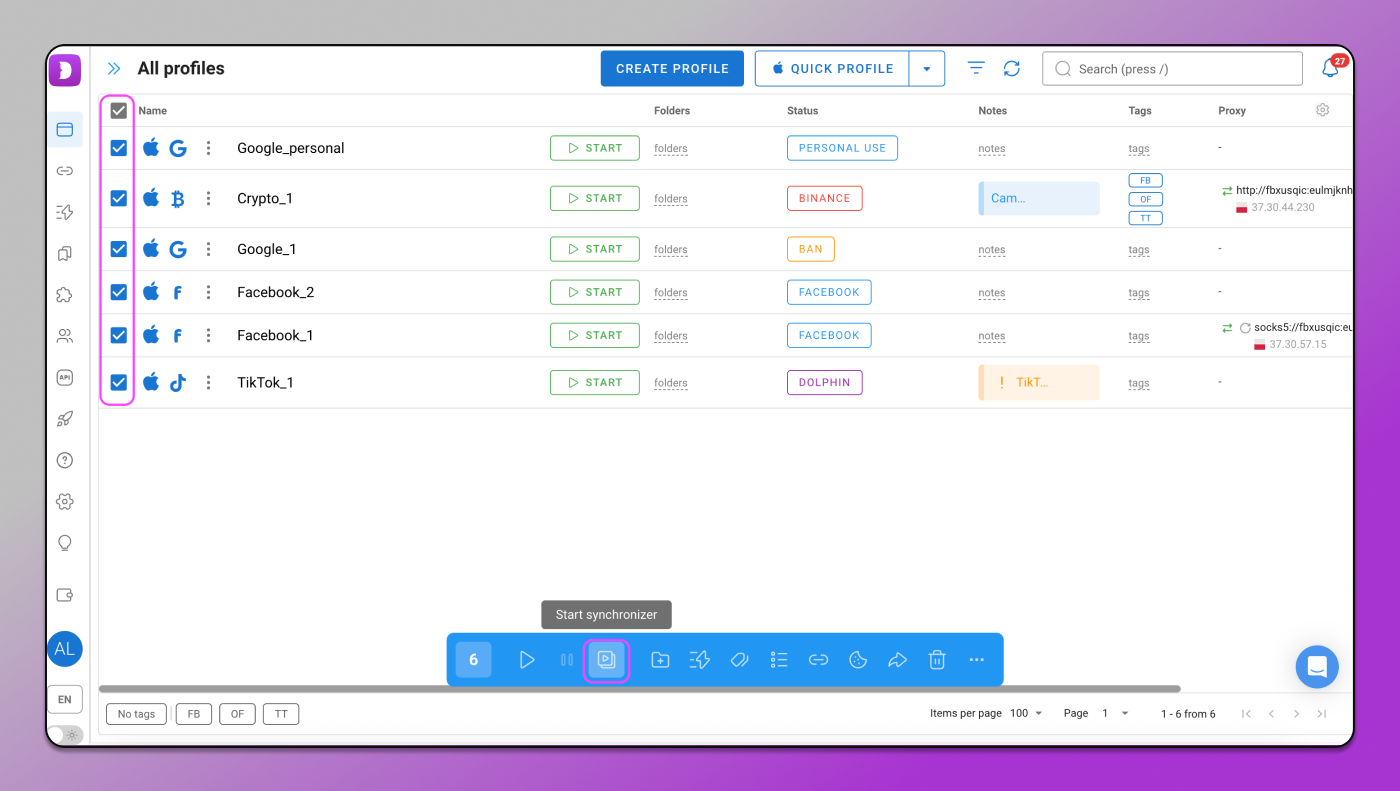
In our view, automation shouldn’t be this complicated. That’s why launching the 🔄 synchronizer in Dolphin Anty takes just a few steps:
- Select the profiles;
- Choose the master account;
- Click the synchronizer button in the bulk actions menu.
That’s it. The selected profiles will open and every action performed in the master profile will be mirrored across all linked profiles.
Dolphin Anty’s automation toolkit goes far beyond a synchronizer and cookie robot. It also includes a Scenario Builder.
📹 Scenarios are a no-code automation tool designed to handle repetitive tasks. Users can create custom workflows by combining pre-built action blocks and then run them across one or multiple profiles simultaneously. Each block can be configured individually. For example, if a workflow needs to click a specific element on a page such as a login form, you can define the click coordinates and specify the text that should be entered into the field.
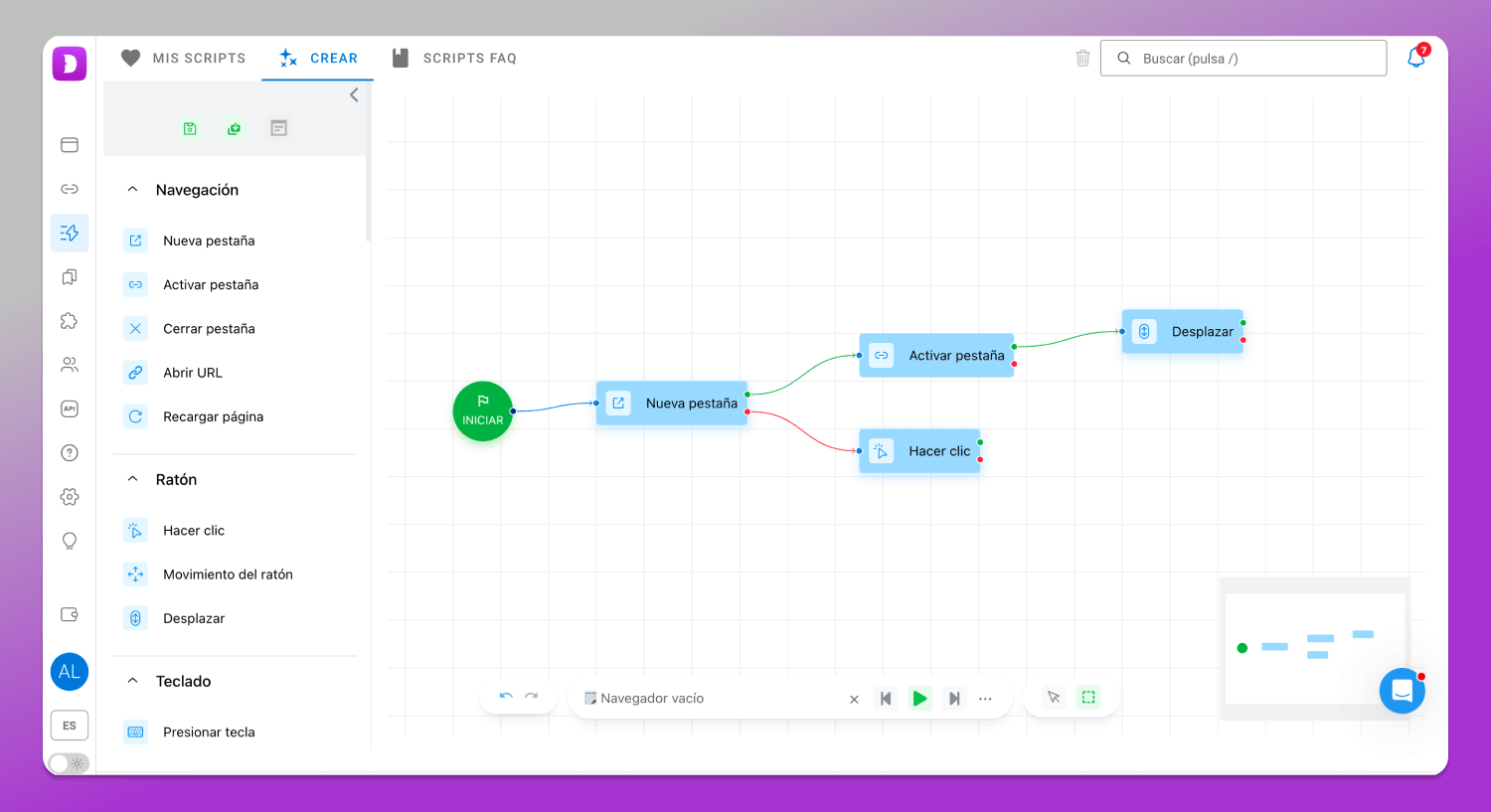
This approach helps save time on repetitive tasks such as logging into accounts, interacting with websites, filling out forms and handling other routine operations.
🍪 Cookie Robot is designed to collect cookies and prepare profiles before they are used, helping them appear more natural to antifraud systems. It can run in the background and even work without loading images, which helps reduce bandwidth usage when working through proxies, for example.
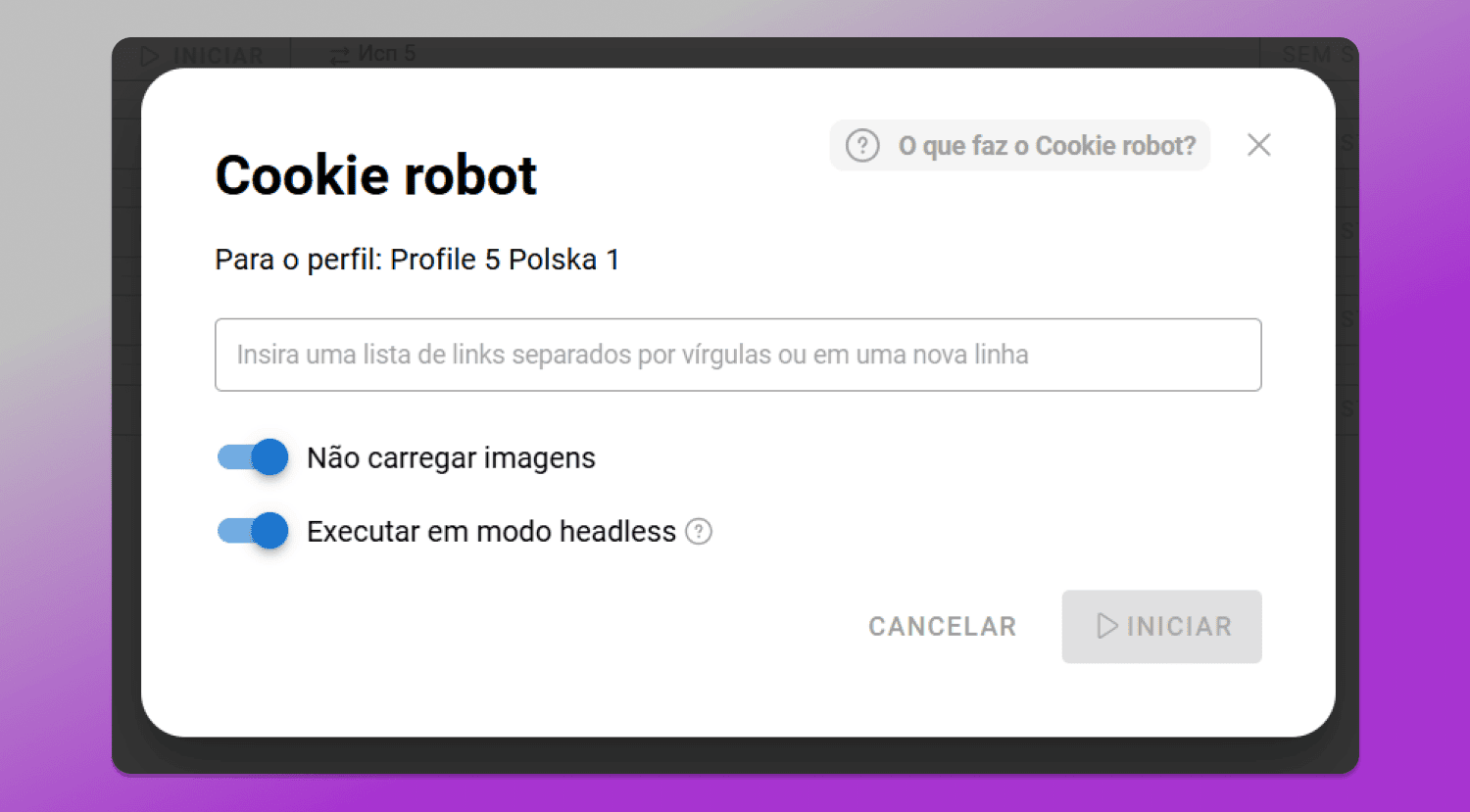
In addition to built-in tools, Dolphin Anty also supports automation via third-party services through its API. Developers can use the documentation to connect profiles with tools like Selenium, Puppeteer and even Playwright.
Bulk Account Import
Both browsers support bulk profile import.
In Incognition you can import profiles by selecting Create Bulk from the left-hand menu and choosing the format in which the profiles will be uploaded.
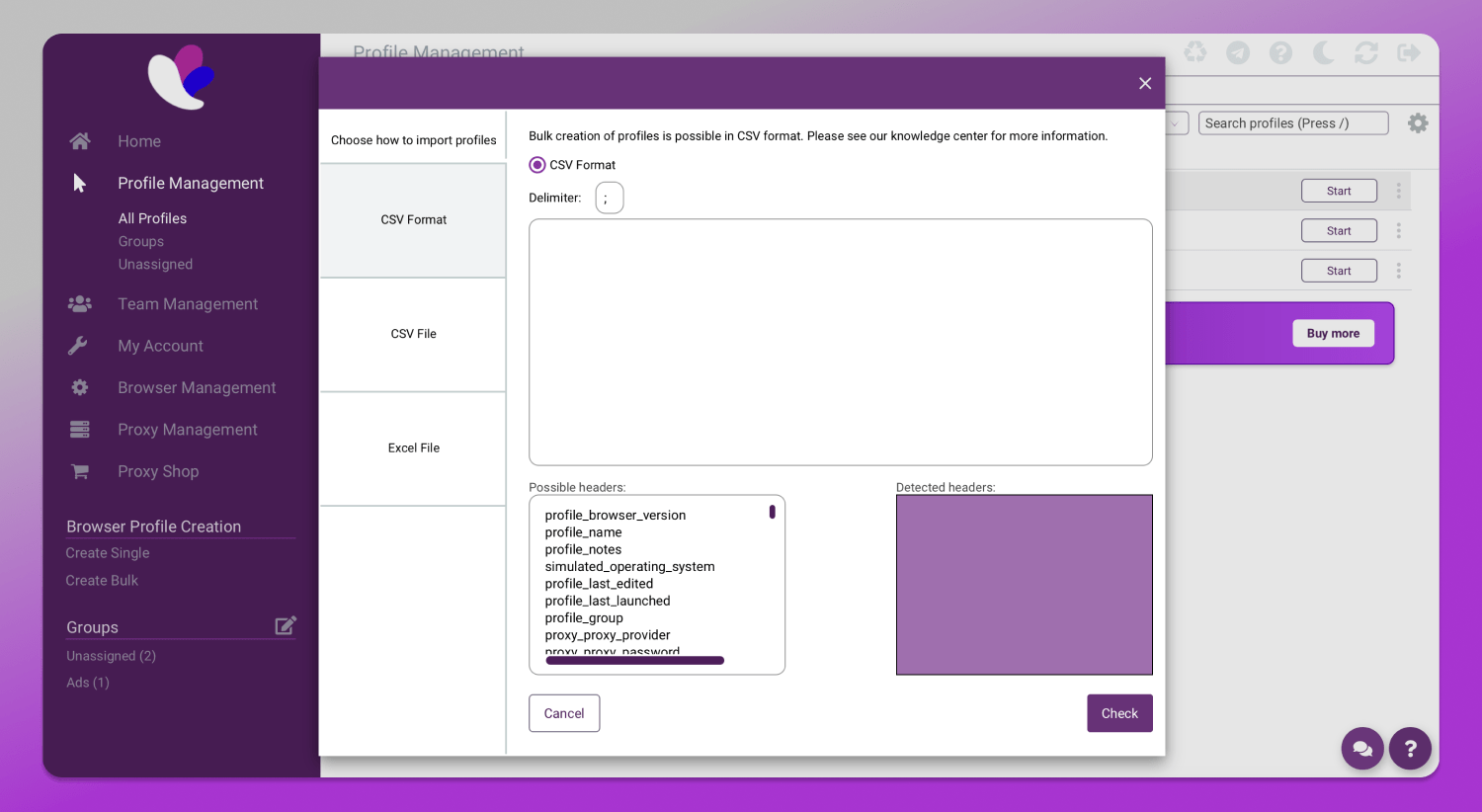
However, getting the template right, especially when working with different data formats, can be tricky. There’s also limited flexibility in configuration: some fingerprint spoofing parameters simply can’t be set at all.
To import profiles into Dolphin Anty, you need to click Create Profile and then go to the Mass Import section.
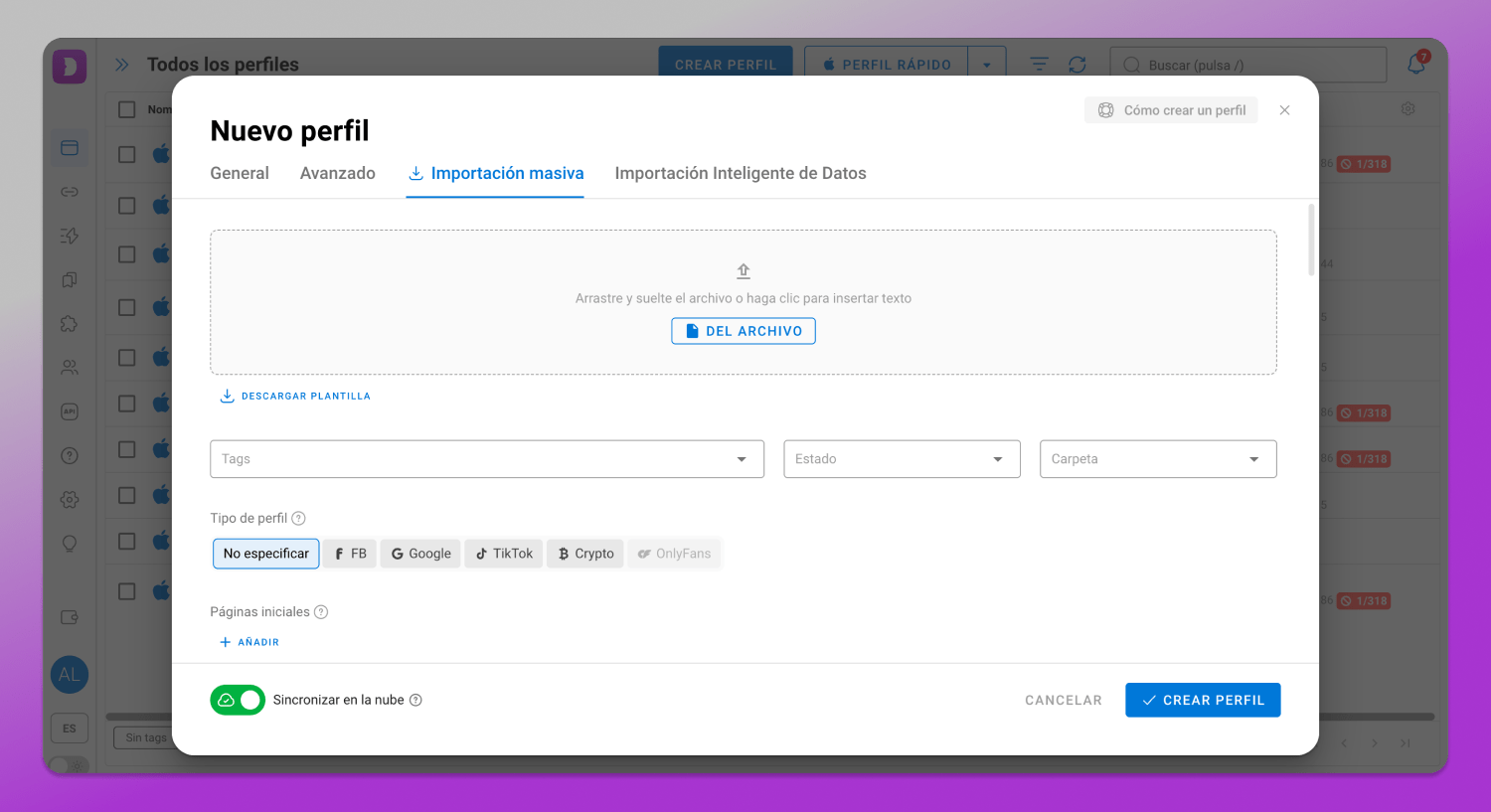
Here you can download a template and define fingerprint parameters for the profiles you’re importing.
Bulk Proxy Import
Incogniton also supports bulk proxy import. This feature is placed in a separate menu and works in much the same way as profile import.
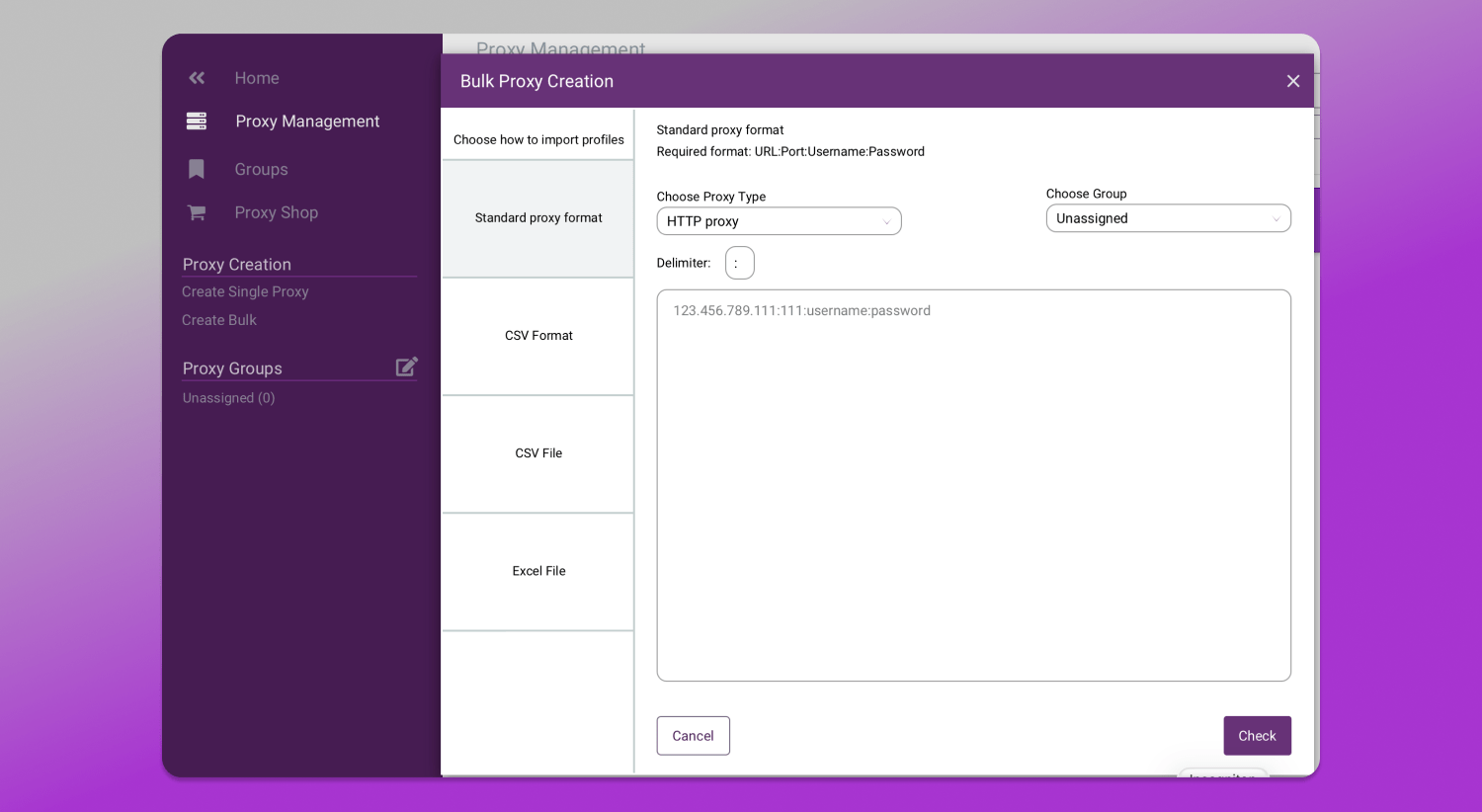
Dolphin Anty includes a more advanced proxy manager with a wider range of functionality. With it you can:
- Bulk add and remove proxies;
- Check proxy availability;
- Edit connection type or authentication details;
- Add a link for IP rotation with a single click;
- Share proxies with team members;
- Assign proxies to profiles manually, randomly or based on predefined rules.
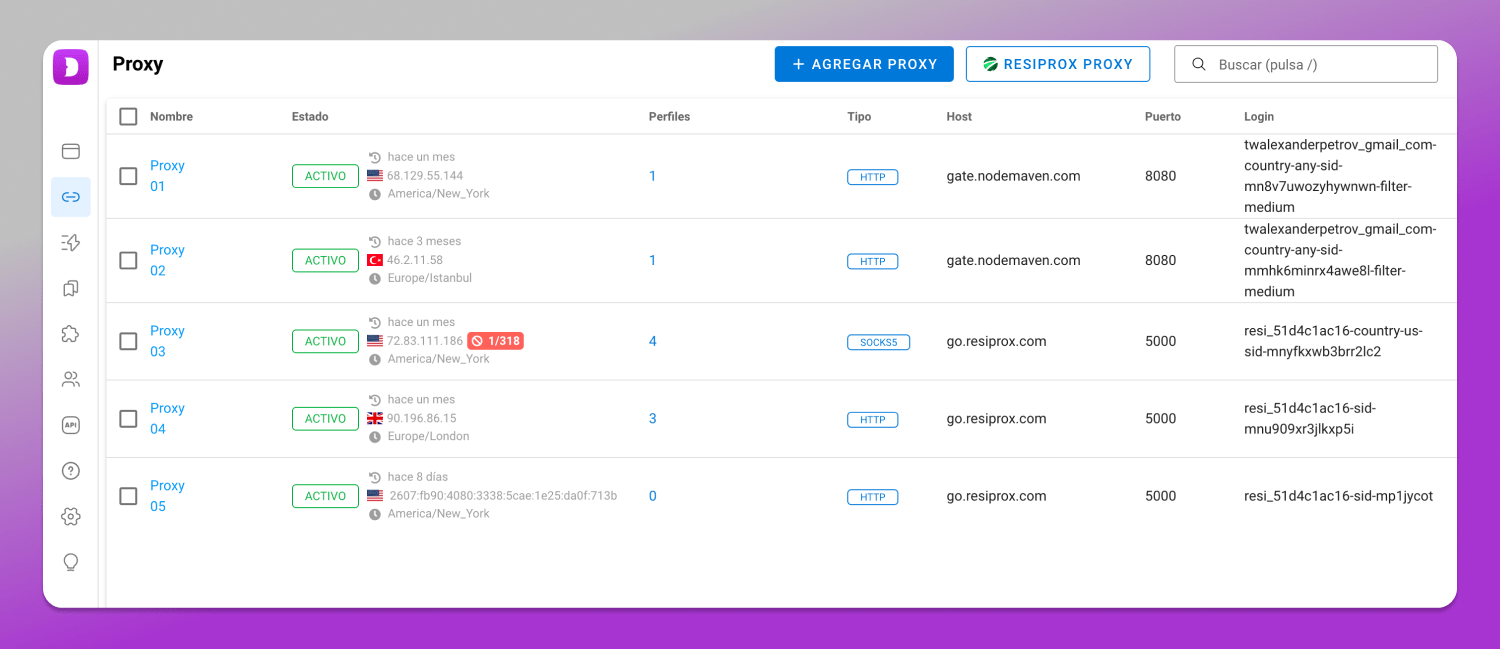
All added proxies are stored in a single window and can be selected from this list when creating new profiles.
Managing Bookmarks, Extensions and Start Pages
In Incogniton you can add shared extensions and bookmarks. They are located in the Browser Management section, which isn’t very intuitive at first glance. These elements must be assigned manually to each profile, as there is no automatic distribution option.
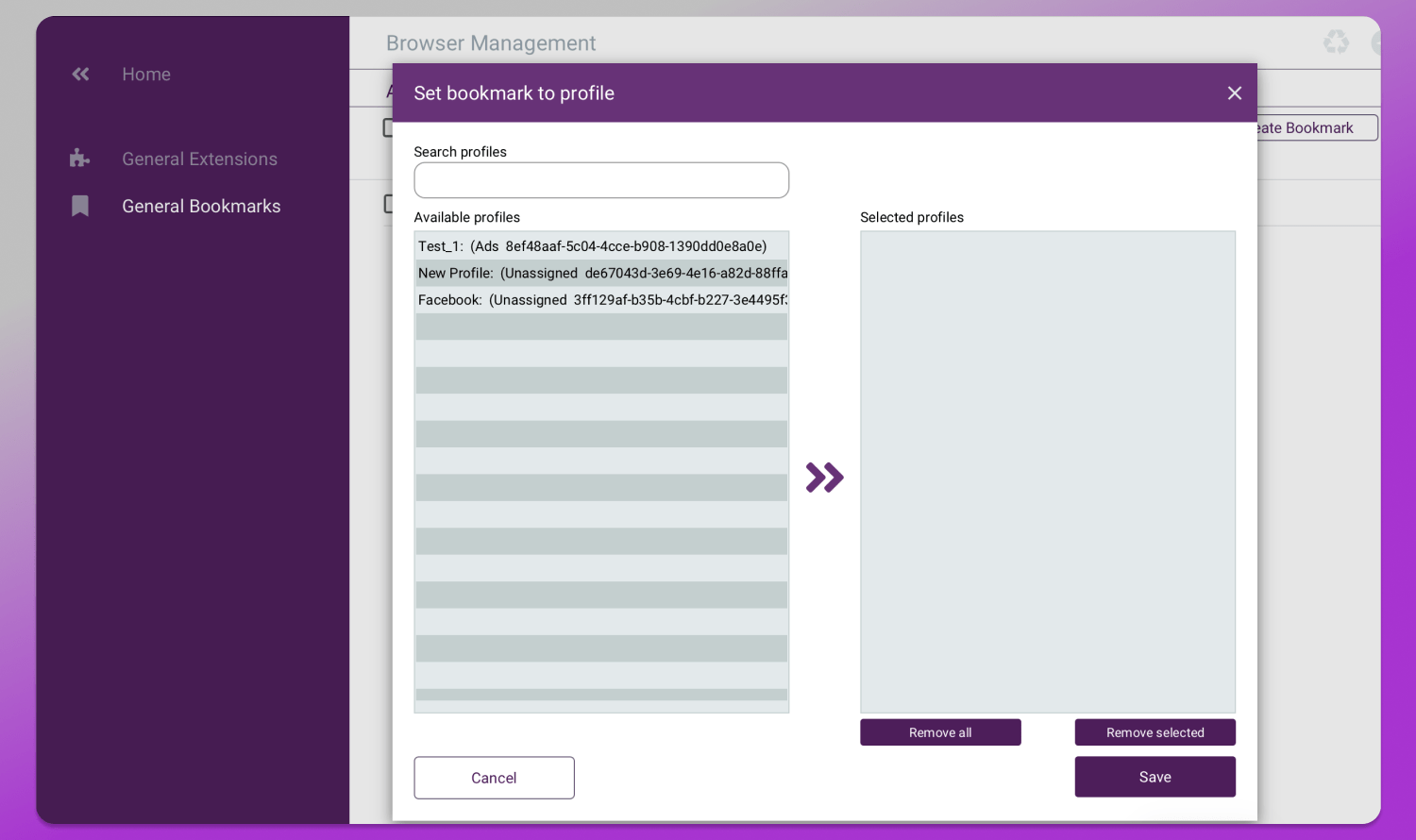
At the same time, it’s not clear which exact bookmark you’re adding. On top of that, profiles include extra symbols beyond just the name, which makes them harder to read.
In Dolphin Anty you can configure not only bookmarks and extensions, but also start pages. These can be set up differently depending on the use case: one set for Facebook, another for crypto-related workflows and a separate one for Google accounts.
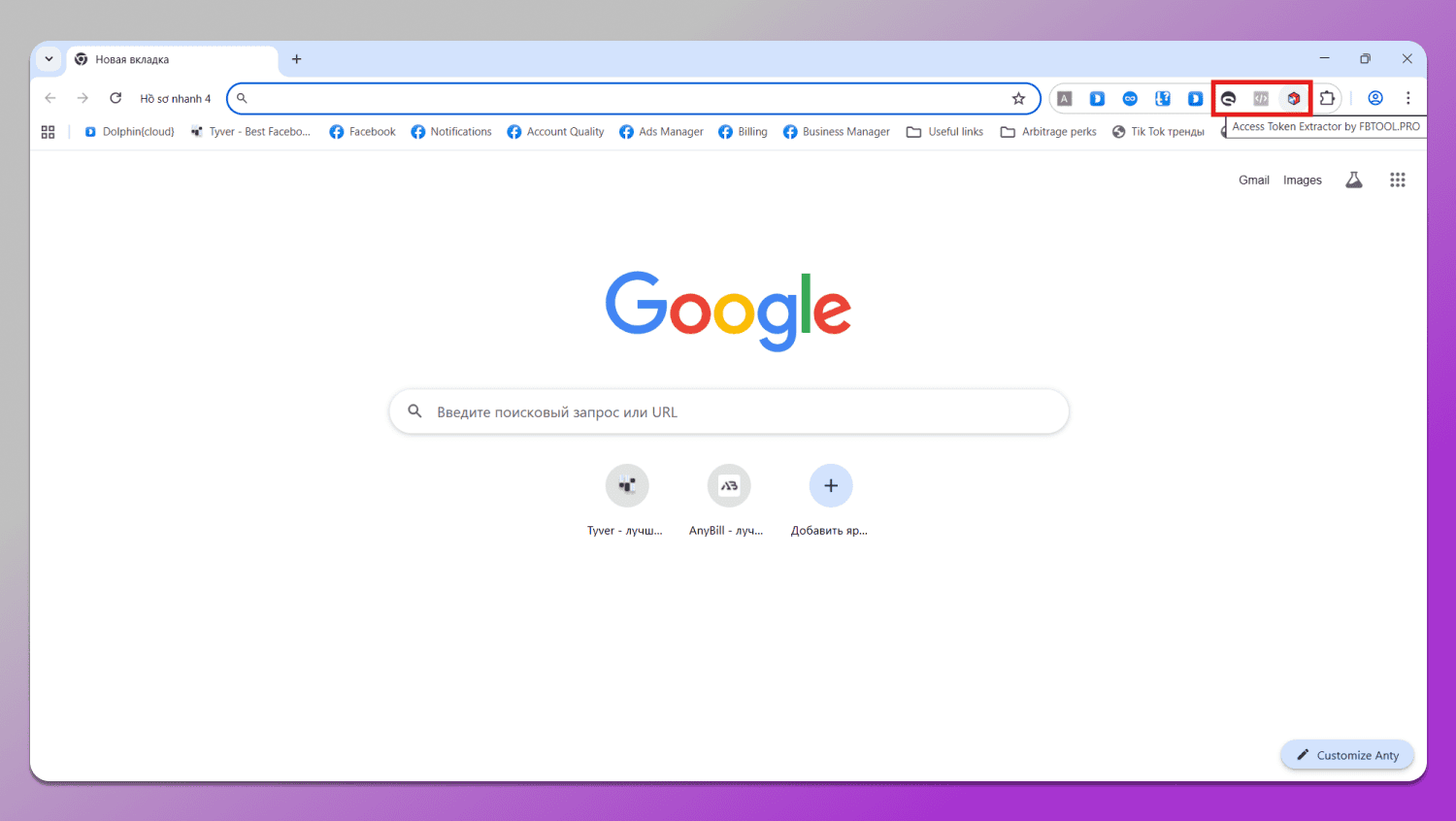
After pre-configuration bookmarks, extensions and start pages will be automatically added to both existing and new profiles after launch. They can also be configured either for yourself only or for the entire team.
Teamwork
In Incogniton you have to create a role and assign access levels every time you add a new team member. At the same time, the process is not very intuitive: when you check one option, several others get deselected. It takes some time to set everything up according to your needs.
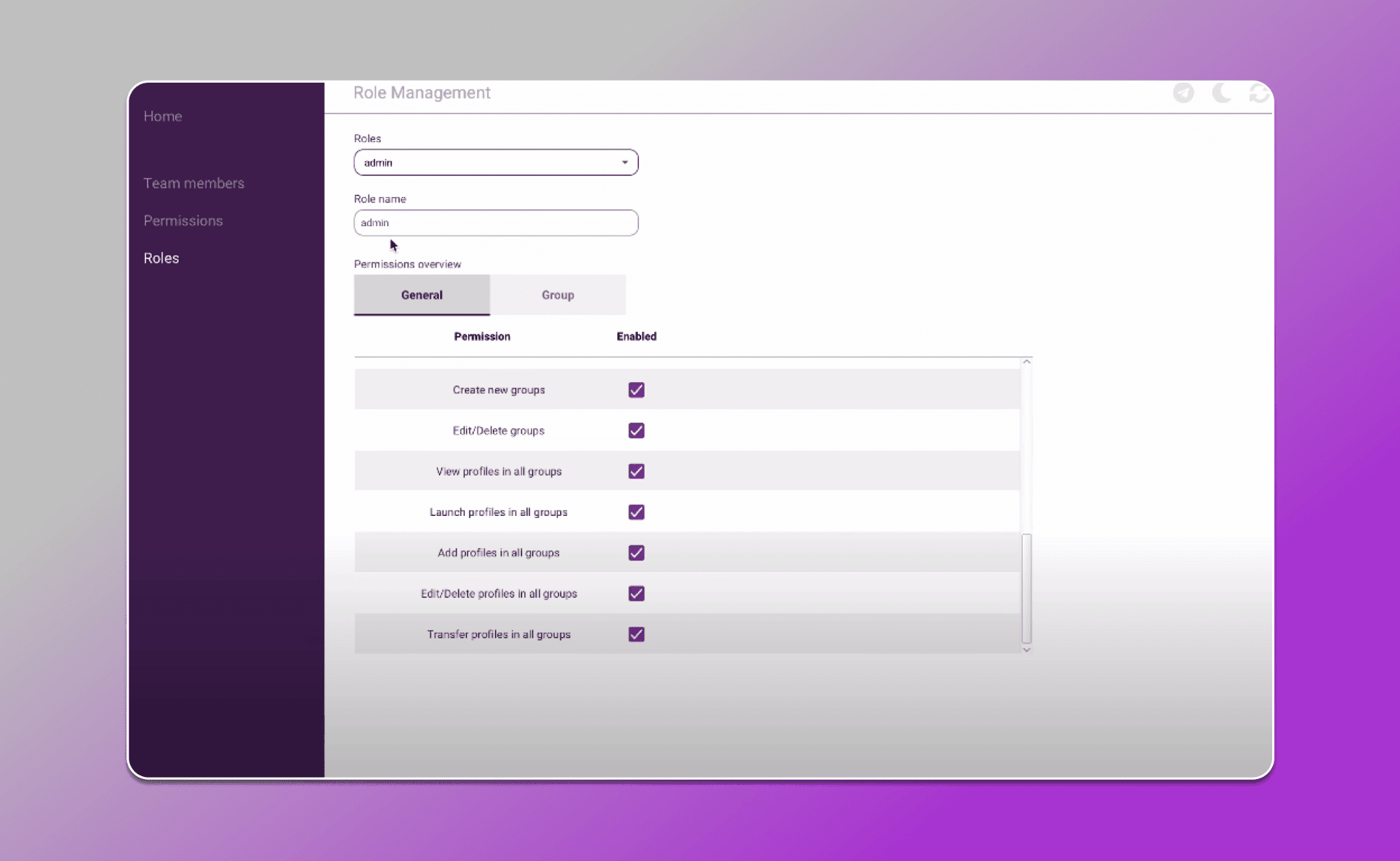
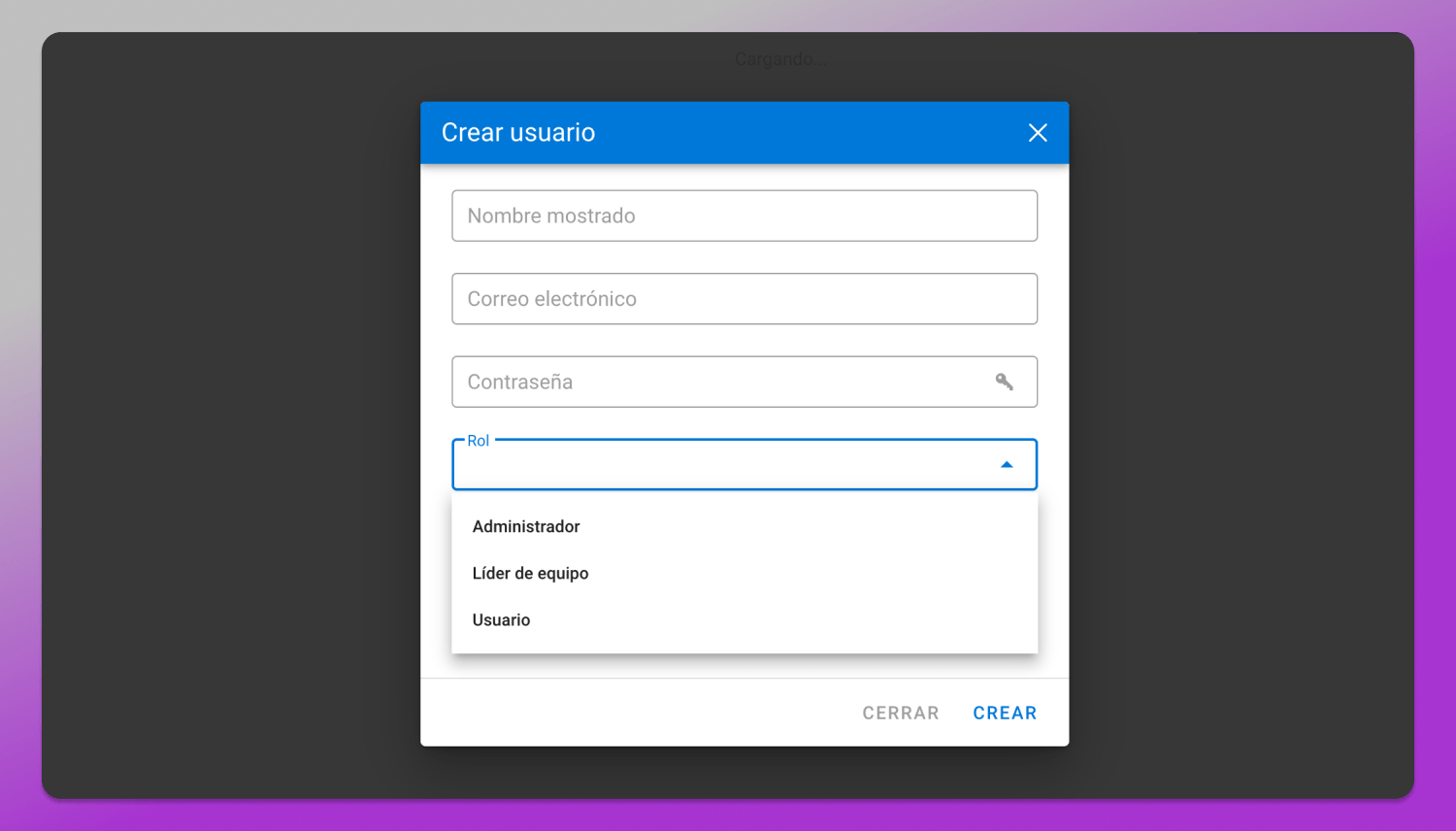
In Dolphin Anty, team collaboration is much simpler. You can add users just by assigning roles. Each role has its own access level. For example, an admin can configure individual permissions for each user. This allows for a more flexible workflow setup.
Collaborative Profile Management
The ➡️ profile transfer feature in Dolphin Anty is highly valued by media buying teams, account farmers and sellers. It allows you to transfer a profile, along with its access and data, to another user or team member.
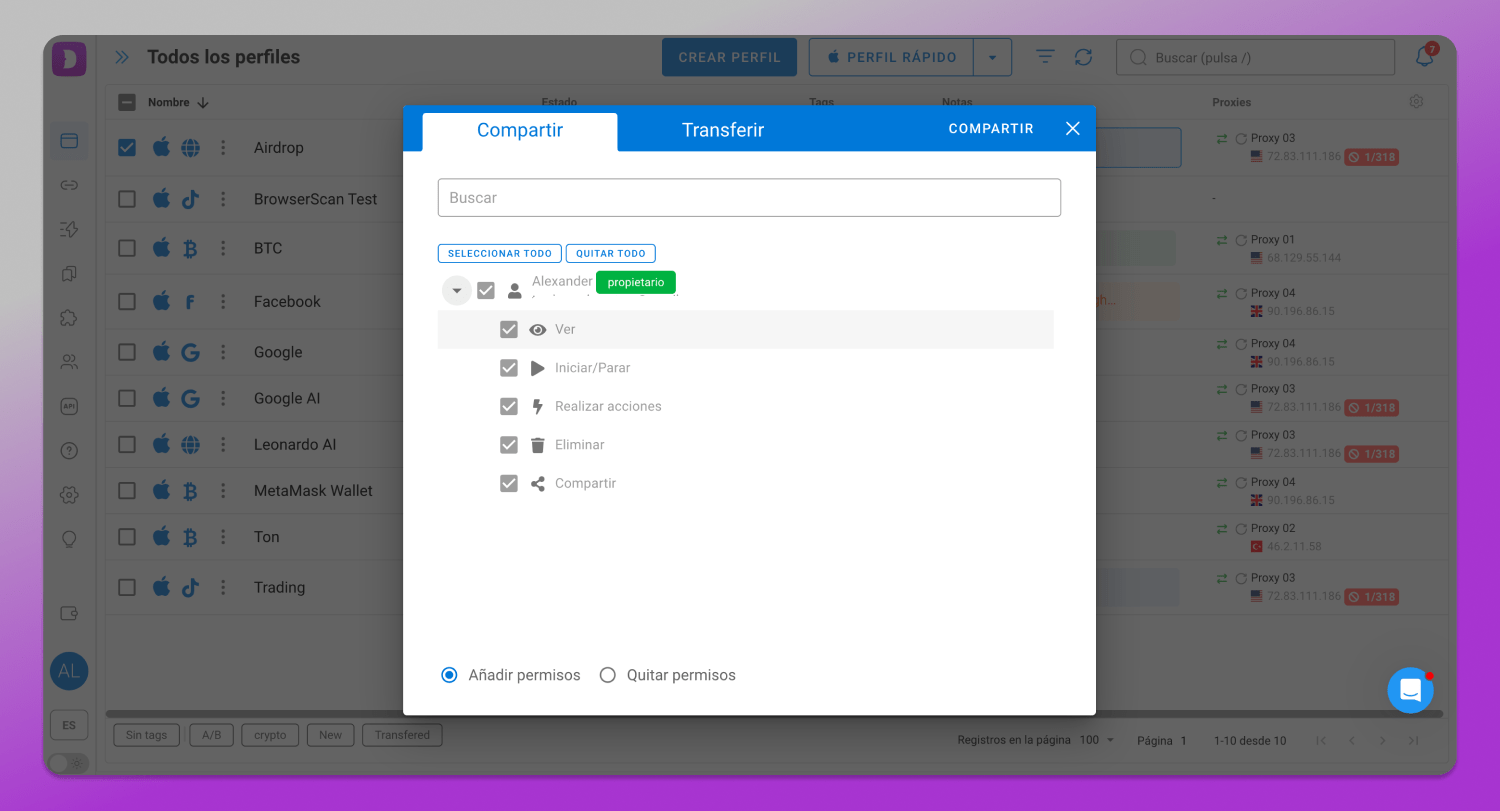
Incogniton also has this feature. To transfer a profile, you need to complete it in two steps:
- Initiate the transfer from the owner’s side
- Accept the profile on the recipient’s side
The process is slower and less convenient.
Incogniton vs Dolphin Anty Pricing
Both Dolphin Anty and Incogniton can be downloaded and tested for free. However, Incogniton’s cheapest subscription is roughly twice as expensive, while offering half the number of profiles. In addition, when subscribing to any plan, the final price turns out higher due to added taxes.
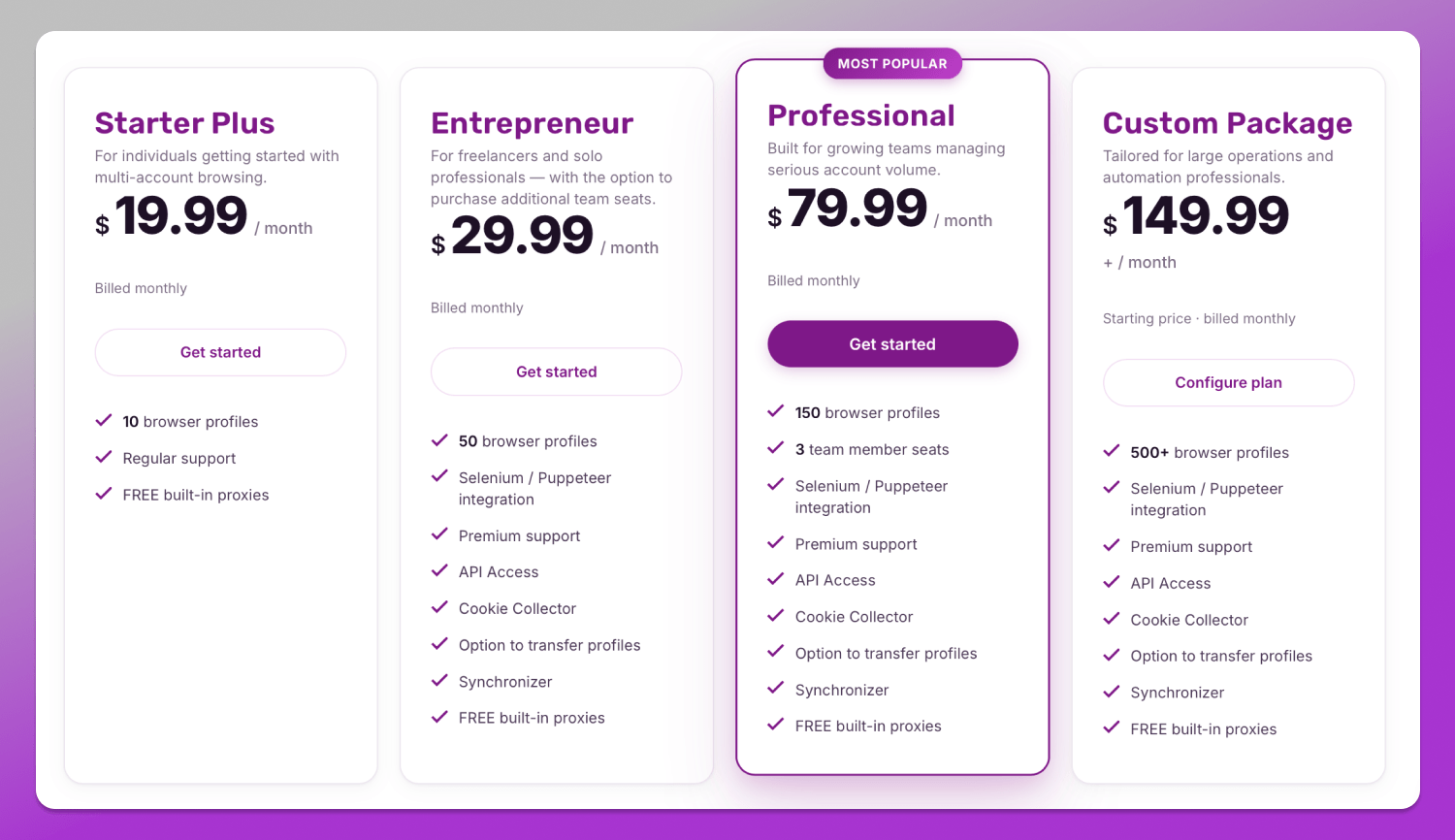
The most affordable plan in Dolphin Anty, which includes 20 profiles, costs just $10 per month. The other plans, even though they may look more expensive, are highly flexible and can be configured to fit different needs. In addition, the feature set is not only broader, but also more convenient to use.
Comparison Table
For easier understanding, we compared Incogniton and Dolphin Anty across all key parameters in a table.
| Parameter | Dolphin Anty | Incogniton |
|---|---|---|
| Interface | Modern, clean, no unnecessary elements | More cluttered, some elements can’t be hidden |
| Profile navigation | Tags, statuses, folders, notes, and advanced search across multiple parameters | Basic tags, groups, and limited search |
| Fingerprint configuration | Well-structured settings, quick profile, additional parameters | Full set of settings, but less intuitive structure |
| Unique fingerprint parameters | MAC address and device name available | Not available |
| Automation | Synchronizer, scenario builder, cookie robot, API for Selenium, Puppeteer, and Playwright | Synchronizer, cookie robot, API; more limited automation tools |
| Bulk profile import | Flexible fingerprint configuration during import | More limited settings |
| Proxy management | Full proxy manager with checking, assignment, and transfer | Bulk import available, but more limited functionality |
| Bookmarks, extensions, start pages | Centralized management with automatic application to profiles | Configured manually for each profile |
| Teamwork | Flexible role system and permission settings | Less convenient role configuration |
| Profile transfer | Fast transfer within teams and between users | Multi-step process |
| Supported OS | Windows, macOS, Linux | Windows, macOS |
| Free plan | Up to 5 profiles, no time limit, no card required | 10 profiles for 2 months, then 3 profiles |
| Pricing | From $10/month for 20 profiles | From $19.99/month for 10 profiles |
Conclusion
Both browsers are suitable for multiaccounting and provide reliable fingerprint spoofing. However, the difference becomes clear in day-to-day work with large numbers of profiles. Incogniton offers a basic feature set but falls behind in navigation convenience, automation, teamwork and proxy management. 🔥 Dolphin Anty, on the other hand, provides a more advanced toolkit, including a synchronizer, scenario builder, cookie robot and a flexible profile management system.