Top Proxy Providers
Blog » Top Proxy Providers
7 Best Proxy Providers for Multi-Accounting in 2026
Enterprise demand for automated data collection and account-based workflows has continued to rise as companies scale competitive intelligence, monitoring, and multi-account operations across multiple platforms. This trend is reflected in market data. Market.us reported that the global web scraping market was valued at USD 754.17 million in 2024 and is projected to reach USD 2,870.33 million by 2034, growing at a CAGR of 14.3%.
That growth signals a shift from isolated scraping tasks to repeatable, production-grade operations. Multi-account activity now depends on stable access, predictable IP reputation, and governance controls. As platforms automate enforcement and tighten identity checks, proxy infrastructure is increasingly treated as a core operational layer rather than a temporary workaround, making provider selection a strategic decision.
What Is Multi-Accounting and Why Proxies Matter?
Multi-accounting is the practice of ⚙️ operating multiple accounts on the same platform while keeping each identity logically and technically isolated. This model is common in marketplace operations, advertising management, testing, and large-scale monitoring.
Platforms actively ❌ restrict this behaviour through IP correlation, device fingerprinting, behavioural analysis, and account graphing. Without proxies, multiple accounts quickly appear linked because they share the same network identity. 🔗 Proxies provide network-layer separation, allowing each account to present itself as a distinct, independent user with its own IP and routing context.
Why Multi-Accounting Requires Specialized Proxies?
Multi-accounting works only when each account keeps an isolated, stable network identity that matches its fingerprint signals. IP reuse, sudden geo changes, aggressive rotation, weak IP reputation, and unstable sessions increase linkage risk and trigger checkpoints, throttling, re-logins, or bans.
📌 Identity separation
Each account must maintain a consistent, yet isolated, network identity. Reusing IPs across accounts, switching geos unexpectedly, or rotating too aggressively increases linkage risk and makes account clustering easier for automated enforcement systems.
📌 Fingerprint correlation risks
IP address, ASN, geo, and session behaviour are evaluated together. Proxies must align naturally with browser and device fingerprints so the identity looks coherent rather than stitched together from conflicting signals.
📌 IP reputation sensitivity
Platforms continuously score IP trust based on historical abuse signals and live behavior. Low-quality or overused IPs degrade faster under multi-account load, which often leads to checkpoints, throttling, or sudden access loss.
📌 Session consistency needs
Many platforms expect long-lived sessions, especially for accounts that repeat the same workflows. Unstable routing, frequent disconnects, or unexpected IP changes during an active session often trigger verification steps, forced re-logins, or bans.
Which Proxy Types Work Best for Multi-Accounting?
- Residential proxies: Real household IPs blend into normal consumer traffic and receive higher trust, making them the default choice for stable, long-term multi-account operations.
- Mobile proxies: Carrier IPs rotate naturally and work well on social and mobile-first platforms, but they require careful session control.
- ISP (static residential): Stable identities with residential reputation suit aged accounts and dashboards that need persistent logins.
- Datacenter limitations: Predictable ranges and fast reputation decay make datacenter IPs unreliable for most multi-account use cases.
Why Residential Proxies Dominate Multi-Account Setups?
Residential proxies provide 🌱 the most natural network identity because traffic comes from real household connections rather than obvious infrastructure ranges. This lowers IP-based correlation, supports steadier long-lived sessions, and typically holds up better under trust scoring than fast-decaying datacenter ranges. In sustained multi-account workflows, residential proxies help keep identities separated and reduce verification loops caused by abrupt IP or reputation shifts.
How Platforms Detect Multi-Account Activity?
Platforms 🔎 detect multi-account activity by flagging reused IPs or tight subnet clusters, sudden ASN or geo jumps, and coordinated behavioural patterns like similar login timing and navigation flows. They also treat simultaneous sessions from the same network identity as a strong linkage signal, especially during sensitive actions.
📌 IP reuse patterns
Multiple accounts appearing from the same IP or a tight subnet cluster get flagged quickly because the platform can group them as a single operator. Reuse becomes even more visible when logins repeat on the same addresses or cycle through a small, predictable set.
📌 ASN and geo mismatches
Sudden jumps between regions or inconsistent ASN behaviour raise risk signals because the network “story” stops looking realistic. A profile that looks local one day and then routes through a different country or an unexpected ASN can trigger challenges or forced verification.
📌 Behavioural signals
Login timing, navigation flows, and action cadence are analysed across accounts to detect coordination. Repeated sequences, identical dwell time, or synchronized activity windows make separate accounts look linked even if IPs differ.
📌 Session overlap indicators
Simultaneous sessions from the same network identity strongly suggest linkage, especially when multiple accounts stay active at once. Overlaps become higher risk during sensitive actions such as logins, payments, or account setting changes.
What Are the Best Proxy Servers for Multi-Accounting in 2026?
Top proxy options for multi-accounting in 2026 range from Live Proxies for high-trust, session-stable setups, through Oxylabs and Decodo for enterprise and mid-scale automation, to SOAX for precise geo targeting, IPRoyal for budget, lower-risk projects, Webshare for basic separation in internal tooling and QA workflows and IPFoxy for scalable operations in different advertising platforms.
- Live Proxies: High-trust setups focused on session predictability and controlled IP reuse for sensitive, long-lived multi-account operations.
- ProxyWing: Clean IP pools with reasonable pricing and user-friendly interface.
- IPRoyal: Budget-oriented option for low-risk accounts and smaller multi-account projects.
- Oxylabs: Large-scale infrastructure suited for enterprise automation combined with multi-account usage.
- Decodo (formerly Smartproxy): Mid-scale choice that balances ease of use with automation compatibility.
- Webshare: Basic separation for internal tooling, QA, and lower-risk checks where quick setup and predictable access matter more than high-risk scaling.
- IPFoxy: Balanced option for teams that need clean IPs with broad geo coverage and flexible rotation control. Well suited for ad accounts and other workflows where stable identity signals and scalable resources are both important.
How Best Proxy Providers Compare for Multi-Accounting?
Multi-account proxy providers ☝️ differ in how they handle identity isolation, session stability, and scale. The table below summarises how each provider fits different multi-accounting scenarios, highlighting where they perform best and where limitations may appear under scale or higher platform sensitivity.
|
Provider |
Best Use | Strength |
Limitation |
| Live Proxies | Sensitive, long-lived multi-account setups | Predictable sessions and controlled IP reuse | Not designed for ultra-low-budget testing |
| ProxyWing | Budget-efficient multi-accounting, scraping, social media & gaming | Clean IPs, very low pricing, fast human support, beginner-friendly UI | Fewer enterprise-only automation tools compared to high-cost providers |
| IPRoyal | Budget and low-risk multi-account projects | Flexible pricing and broad proxy types | Less predictable reuse under heavy load |
| Oxylabs | Enterprise automation with multi-accounting | Large, diverse IP pools at scale | Higher cost and operational complexity |
| Decodo | Mid-scale automation workflows | Simple management and balanced rotation | Less specialised for high-risk clusters |
| Webshare | QA, internal tools, low-risk separation | Fast setup and predictable basics | Limited suitability for sensitive platforms |
| IPFoxy | Scalable operations across ads, social and e-commerce | Large pool of clean IPs with wide geo coverage | Premium network may be excessive for very small or short-term test setups |
Which Key Features Matter Most in Multi-Accounting Proxies?
❗ The most important features are clean real-user IP sourcing, configurable rotation, stable sticky sessions, and geo plus ASN targeting that matches account signals. Together, they reduce reputation risk, minimise linkage, and lower verification pressure during sustained multi-account activity.
📌 Clean IP sourcing
IPs should come from real users, with low reuse frequency and minimal historical abuse signals. Cleaner sourcing reduces inherited reputation risk and improves stability on defended platforms, especially during sustained multi-account activity.
📌 Rotation control
Rotation must be configurable and predictable. Over-rotation creates inconsistent network signals, while static reuse increases linkage, so control is critical, especially during sustained multi-account activity.
📌 Sticky sessions
Accounts require stable sessions across logins and workflows. Consistent sessions reduce re-verification and avoid disruptive mid-flow IP changes, especially during sustained multi-account activity.
📌 Geo and ASN targeting
Geo and ASN settings should match the account location and behaviour signals. Consistency here improves trust alignment and reduces verification pressure, especially during sustained multi-account activity.
Top 7 Proxy Providers for Multi-Accounting in 2026
Proxy providers used for multi-accounting in 2026 differ mainly in how they handle identity isolation, session stability, and scale. Some focus on high-trust environments with predictable sessions, while others prioritise flexibility, regional coverage, or cost efficiency. The providers below represent a range of approaches commonly used for multi-account workflows with different risk and operational requirements.
1. Live Proxies
Live Proxies is positioned for teams that prioritise account safety and session predictability. Its infrastructure focuses on private allocation and controlled reuse, which is critical when running multiple accounts over long periods. It offers sticky sessions for up to 24 hours and allows unlimited threads with around-the-clock support. Coverage is broad across many countries, with especially strong availability in the US, UK, and Canada. For use cases that need scale without bottlenecks, unlimited residential proxies can be a practical fit, especially when you want stable sessions and consistent access over time.
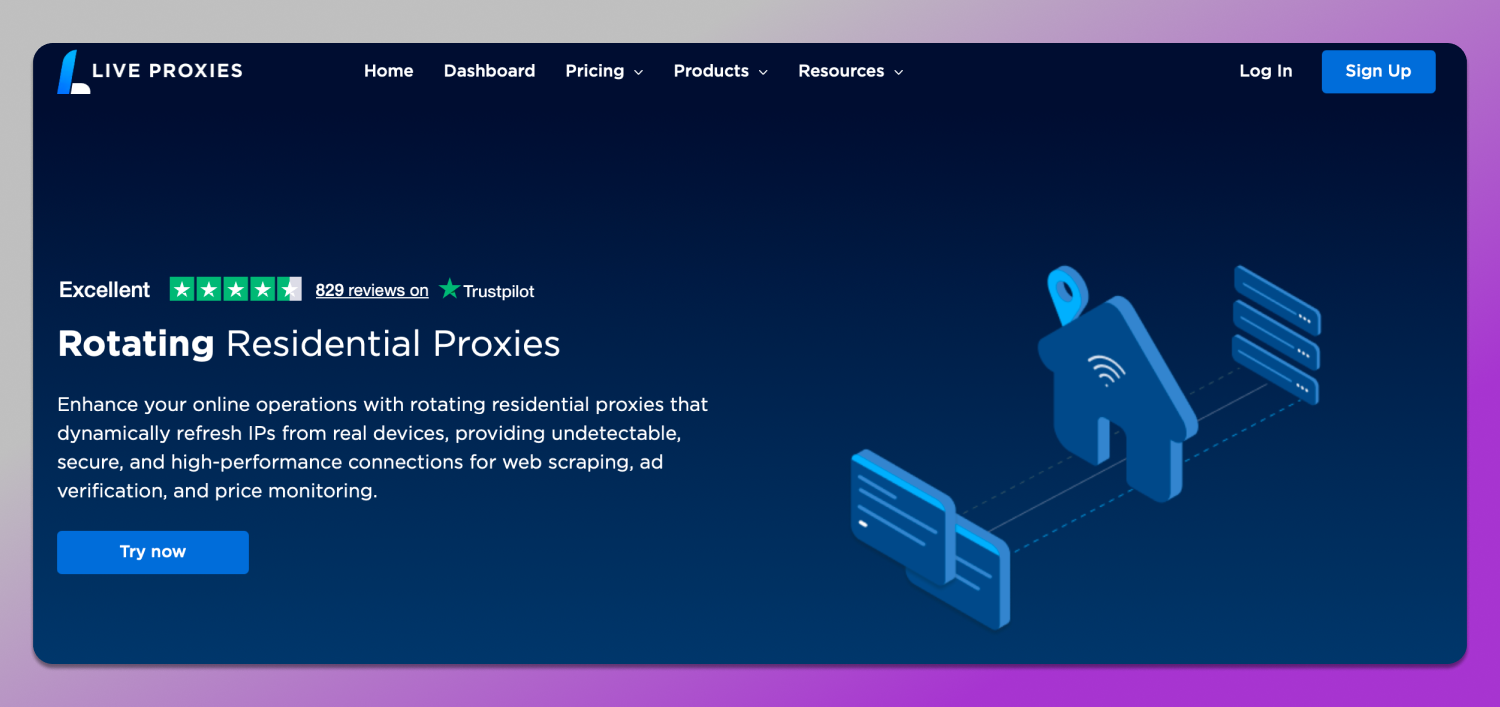
- Proxy types: Rotating residential, static residential, rotating mobile.
- Highlights: Private allocation and controlled reuse reduce cross-account noise, sticky sessions support long-lived workflows, and stable identity continuity for sensitive platforms.
- Best for: Long-lived multi-account setups, sensitive platforms, and scaled environments where predictability matters.
- Limitations: Less suited to ultra-low-budget experimentation.
- Starting price: Starts from $70 / 4 GB per 30 days (Rotating Residential | US States).
2. ProxyWing
ProxyWing is a cost-efficient proxy provider focused on stability, clean IP reputation, and ease of use for multi-accounting, web scraping, crypto-related activities, social media management, and gaming. The platform combines transparent pricing, a fast and beginner-friendly setup, and responsive 24/7 human support, making it suitable for both newcomers and experienced teams that don’t require enterprise-level complexity.
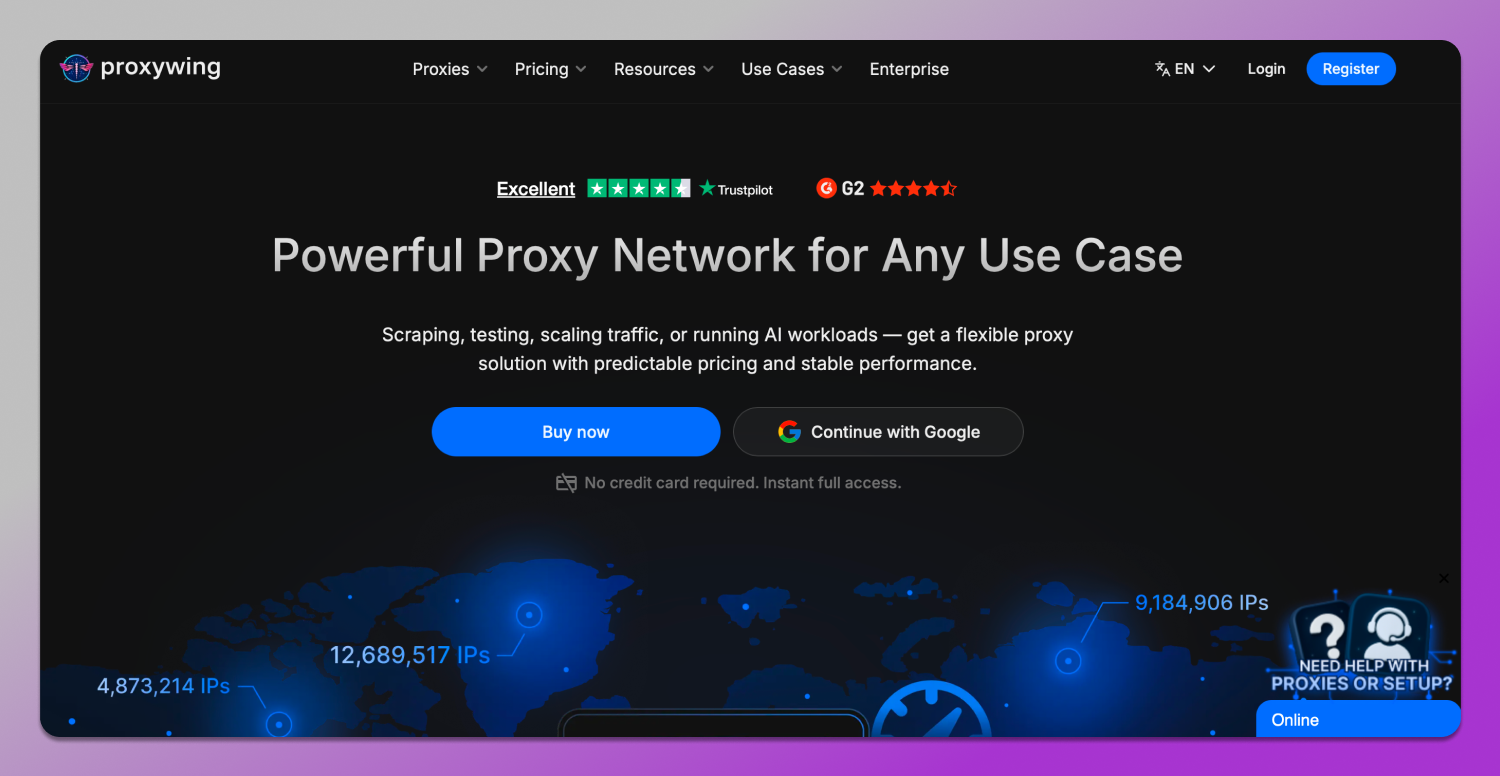
- Proxy types: Datacenter proxies, Residential proxies, ISP proxies
- Highlights: Very competitive pricing across all proxy types, clean IP reputation with low ban rates, simple dashboard with clear traffic tracking, fast human support, and UDP support for gaming-related use cases.
- Best for: Budget-efficient multi-accounting, web scraping, social media management, gaming, and users who want stable proxies without enterprise-level complexity.
- Limitations: Fewer enterprise-grade automation tools and advanced APIs compared to high-cost, enterprise-focused providers.
- Starting price: From $0.90/IP (datacenter), $1.80/IP (ISP), and $2.50/GB (residential).
3. IPRoyal
IPRoyal is often used for lower-risk or budget-sensitive multi-account workflows because flexible pricing and a broad lineup cover the core proxy types for separation, testing, and light automation. It also offers self-serve controls like instant IP changes, timed auto-rotation, and long sticky sessions to keep network identity consistent during routine activity.
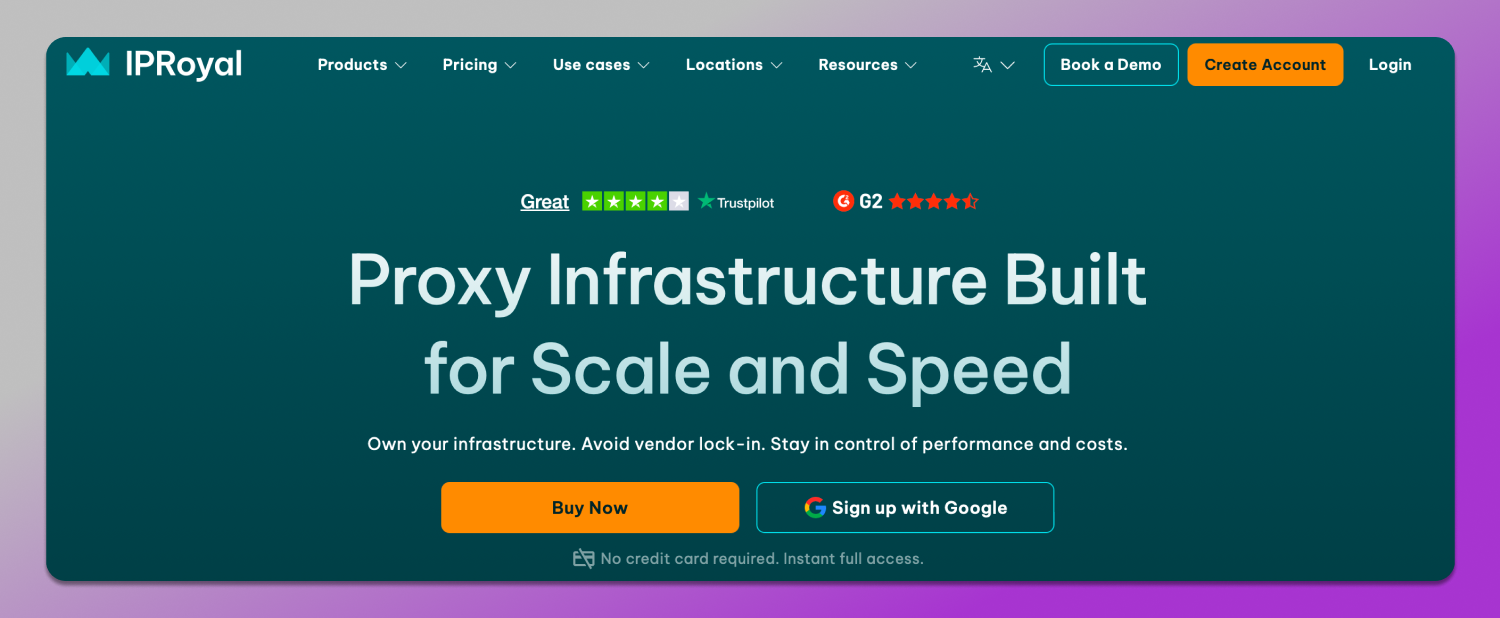
- Proxy types: Residential, mobile, ISP, datacenter.
- Highlights: Flexible pricing and broad proxy coverage make it easier to match spend and proxy type to account risk.
- Best for: Low-risk account separation, warming phases, and smaller multi-account projects.
- Limitations: IP reuse can be less predictable under heavy concurrent load.
- Starting price: $7.35/GB (Pay As You Go, 1GB).
4. Oxylabs
Oxylabs is an enterprise-focused proxy provider known for very large IP pools and infrastructure built for scale. The service targets automation-heavy and high-concurrency use cases where stability, geo precision, and predictable performance matter more than simplicity or low cost.
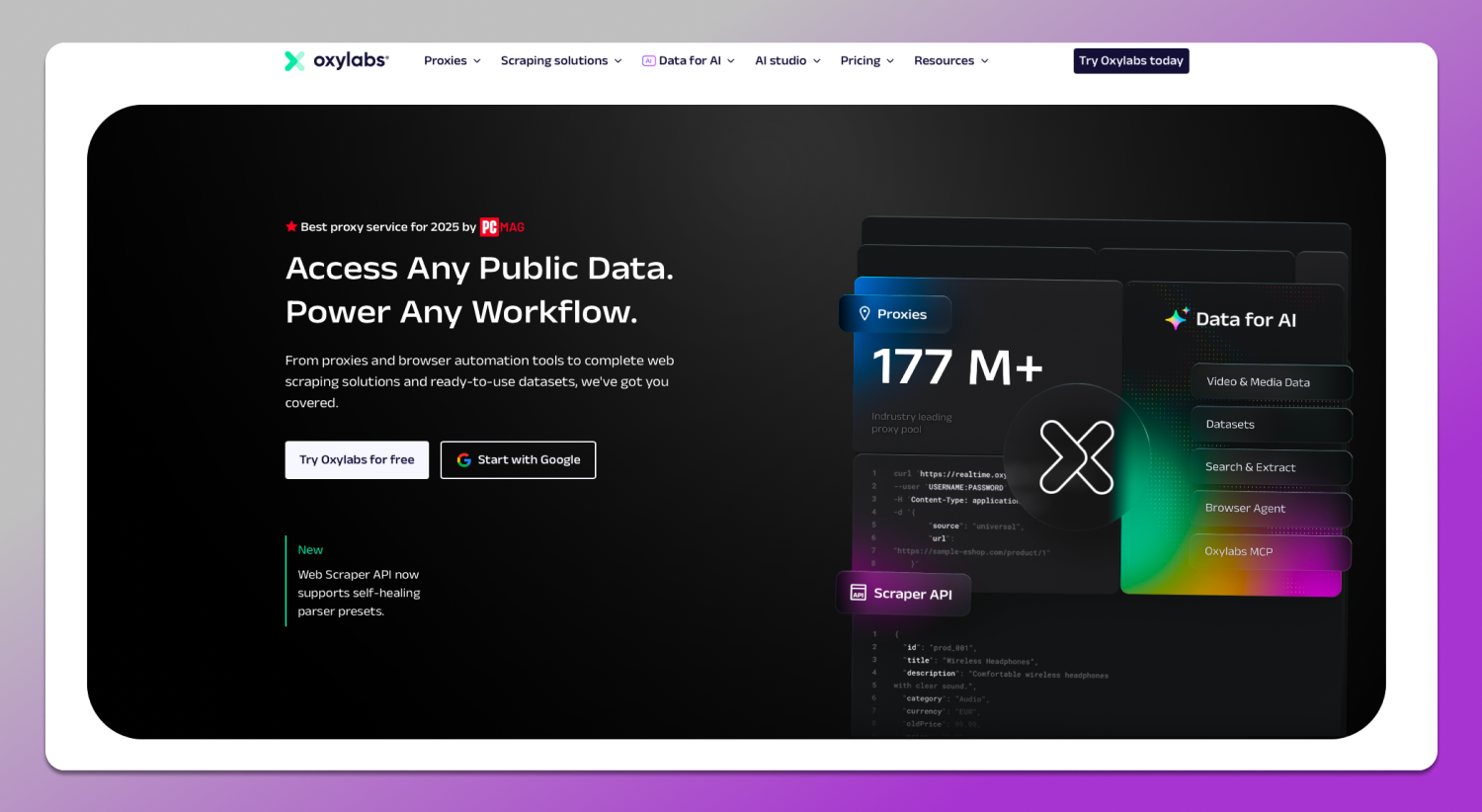
- Proxy types: Residential, Mobile, ISP (static residential), Datacenter, Dedicated Datacenter, Dedicated ISP.
- Highlights: Very large enterprise-grade pools, advanced geo and ASN targeting, strong performance under high concurrency and automation-heavy workloads.
- Best for: Enterprise multi-accounting, large-scale marketplace monitoring, ad verification, and data-heavy automation.
- Limitations: Higher pricing than mid-market providers and more operational complexity at scale.
- Starting price: From $4/GB residential pay-as-you-go.
5. Decodo (formerly Smartproxy)
Decodo (formerly Smartproxy) offers a practical balance of control and simplicity for teams running multiple web data projects, with quick onboarding, plus dashboard usage visibility and self-serve tooling. It provides residential, static residential, mobile, and datacenter proxies, and also sells scraping APIs as a separate product line.
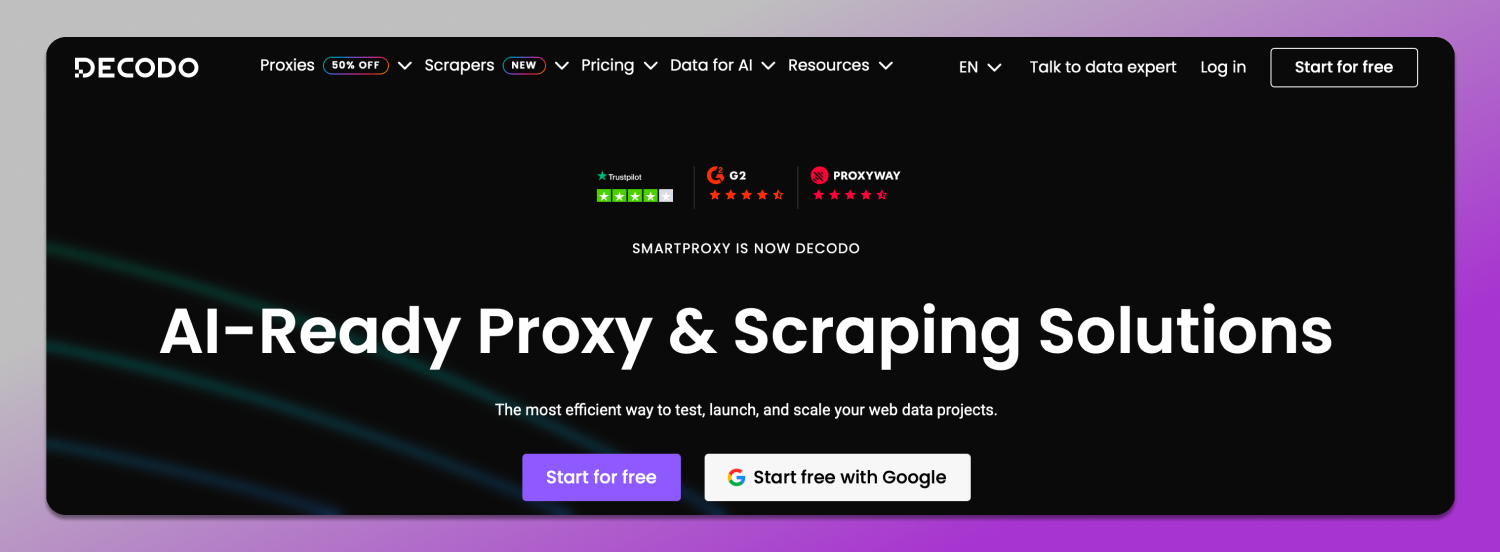
- Proxy types: Residential, Static residential (ISP), Mobile, Datacenter.
- Highlights: Clear dashboard stats and self-serve tooling, plus APIs that fit common automation stacks.
- Best for: Mid-scale multi-account workflows and multi-tool automation pipelines that need solid control without heavy enterprise overhead.
- Limitations: Less purpose-built for ultra-sensitive, high-risk account clusters than top-tier enterprise-first providers.
- Starting price: From $1.5/GB residential proxies.
6. Webshare
Webshare is typically used for internal tooling, QA, or lower-risk account separation because it offers straightforward self-serve access and predictable setups. It fits routine validation, testing, and basic identity separation workflows where simplicity and stable access matter more than high-risk scaling or advanced session control.
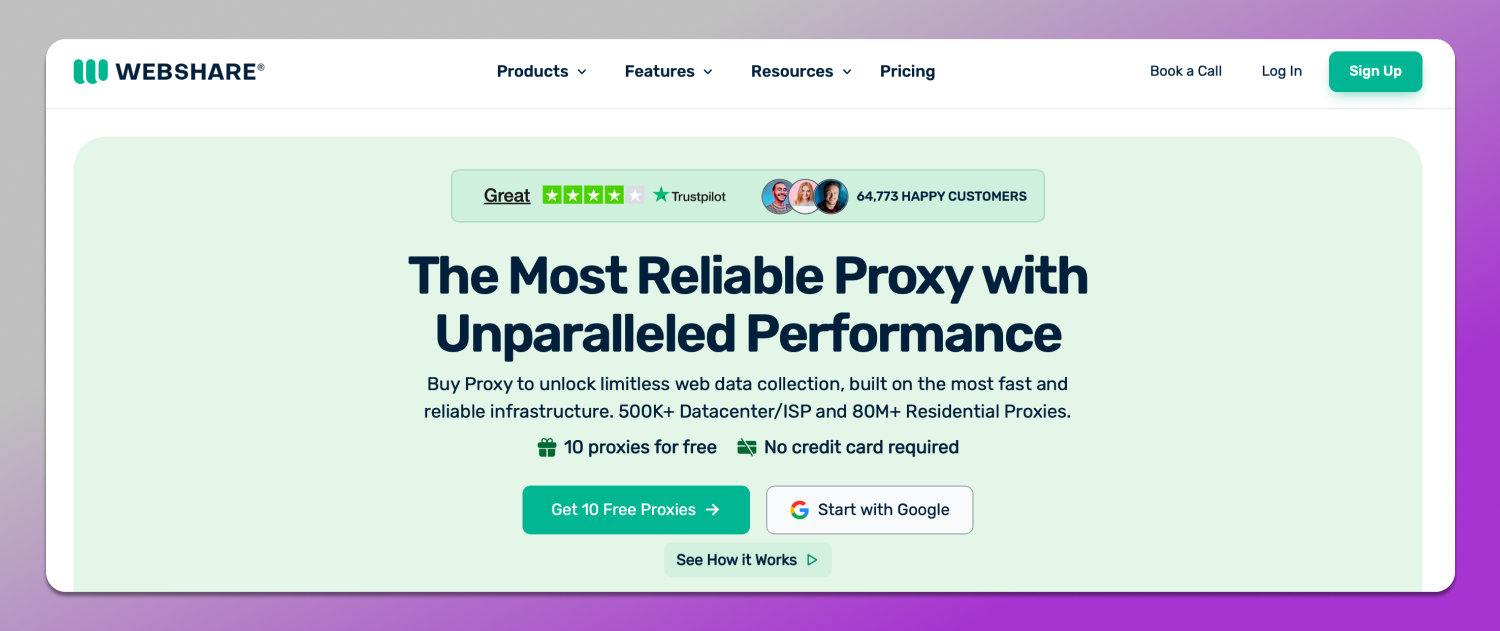
- Proxy types: Proxy Servers (datacenter), Static Residential, Rotating Residential.
- Highlights: Self-serve onboarding with a dashboard, product split by use case, and clear entry-level options for testing and routine checks.
- Best for: QA validation, internal tooling, and low-risk separation where simplicity and repeatability matter.
- Limitations: Limited suitability for high-risk platforms where stronger trust signals and tighter identity control are required.
- Starting price: From $0.30 per proxy / $6.00 billed monthly (Static Residential, 20 proxies).
7. IPFoxy
IPFoxy is a premium proxy provider built around high-quality residential and mobile IP networks with additional ISP and datacenter options. It’s designed for teams that need clean IP reputation, wide geo coverage and flexible integration when running multiple browser profiles in Dolphin Anty.
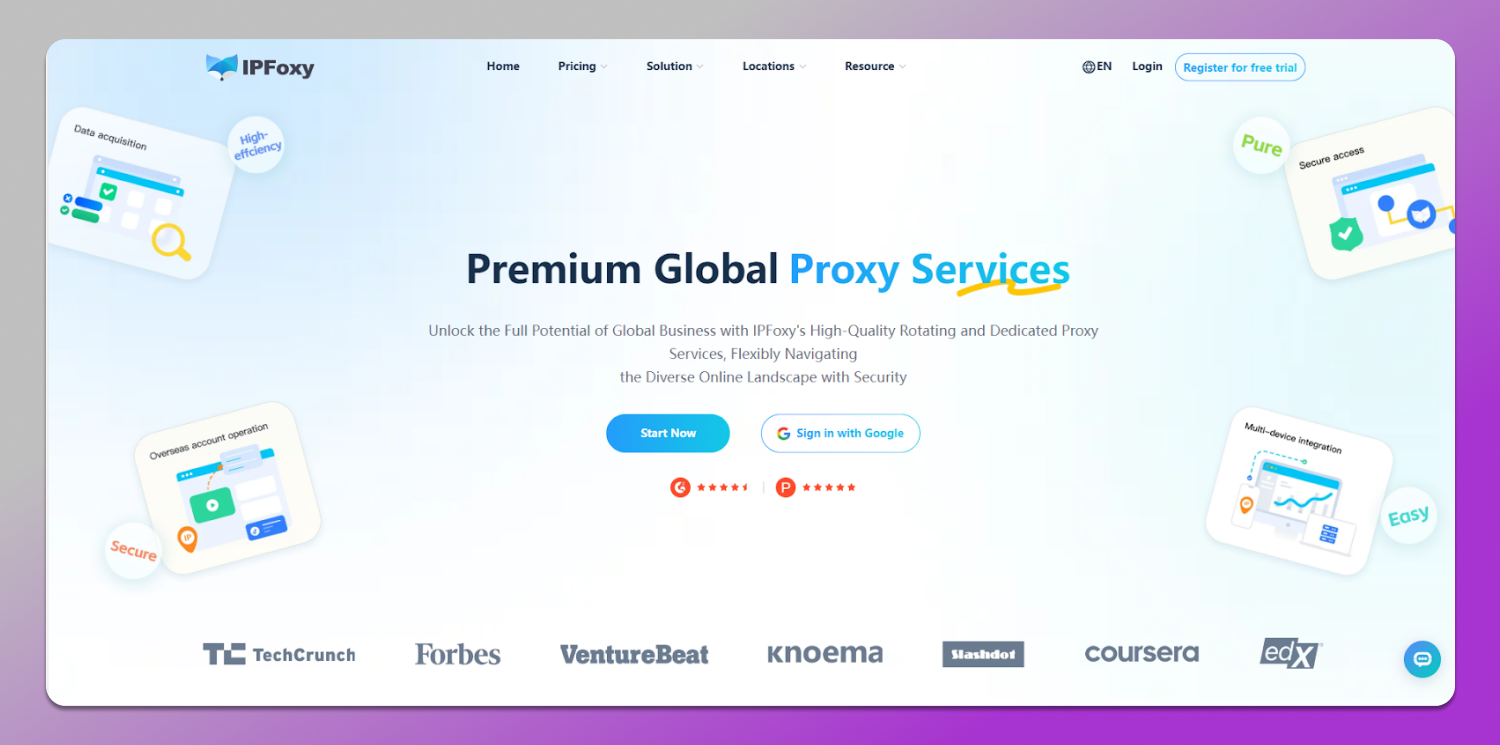
- Proxy types: Rotating residential, static ISP (residential), datacenter and mobile (4G/5G).
- Highlights: Large pool of high-trust IPs with low reuse rates, precise geo targeting across 200+ regions and flexible rotation control. Supports both sticky and rotating workflows, along with HTTP(S) and SOCKS5 protocols for easy integration.
- Best for: Multiaccount management, geo-sensitive workflows, ad verification, e-commerce operation and long-running sessions that require stable identity signals.
- Limitations: Premium infrastructure may be less cost-efficient for very small or short-term test campaigns.
- Starting price: Residential traffic from $0.8/GB, ISP proxies from $7.99/IP, datacenter proxies from $3.99/IP, mobile proxies from $0.8/GB.
How to Build a Safe Multi-Account Proxy Setup?
A safe multi-account proxy setup assigns each account a stable proxy identity, uses residential and rotating mobile proxies based on the platform environment, and scales account volume gradually while monitoring success and verification rates.
📌 Account-to-IP Assignment
Each account should map to a stable proxy identity so network signals stay consistent across logins and routine actions. Reusing the same IP across multiple accounts, or switching identities too often, increases correlation risk and makes verification more likely.
📌 Residential vs Rotating Mobile Proxies
Residential proxies support long-lived, stable account activity by keeping location and network identity signals consistent over time. Rotating mobile proxies support platform environments where carrier-network traffic aligns naturally with mobile-first checks and stricter social platform controls.
📌 Scaling Strategy
Increase account volume gradually while monitoring success and verification rates. Gradual scaling makes it easier to spot proxy saturation, rising checkpoints, or reputation decay before they affect the entire account set.
What Are the Most Common Multi-Accounting Mistakes?
The most common mistakes are sharing IPs between accounts, rotating identities too often, switching proxy types mid-lifecycle, and ignoring browser fingerprints that can still link accounts across sessions.
- Sharing IPs across accounts: Even brief overlap can create lasting linkage because platforms cluster accounts by repeated network signals over time.
- Over-rotating identities: Frequent IP changes disrupt behavioural consistency and can trigger verification when location and routing signals shift too often.
- Mixing proxy types: Switching between residential and mobile mid-lifecycle can introduce inconsistent network signals and raise correlation risk.
- Ignoring browser fingerprints: Proxies isolate the network layer only, so fingerprint reuse still links accounts across sessions and environments.
Is Multi-Accounting Legal?
Multi-accounting legality depends on the platform’s terms and the jurisdiction where the activity occurs. Proxies are legal infrastructure tools, but using them to bypass restrictions, misrepresent identity, or access services in prohibited ways can violate service agreements and trigger enforcement. Teams typically reduce risk by defining clear operational boundaries, documenting acceptable use, and keeping compliance awareness aligned across regions, use cases, and account lifecycles.
Conclusion
Multi-accounting in 2026 is no longer about evasion tricks but about operational discipline. Proxy providers that deliver clean sourcing, predictable session behaviour, and controlled reuse form the backbone of safe multi-account workflows.
Live Proxies, SOAX, IPRoyal, Oxylabs, Decodo, Webshare and IPFoxy each serve different risk profiles. The right choice depends on platform sensitivity, scale requirements, and how much identity stability matters to the operation.